Essential Rome: You Need To Know About Domus Transitoria

Are you heading to Rome anytime soon and want something new and cool to see? I just found out about a new ancient site that has recently re-opened that I absolutely have to visit, and maybe you will want to too!

Let’s Talk Nero…
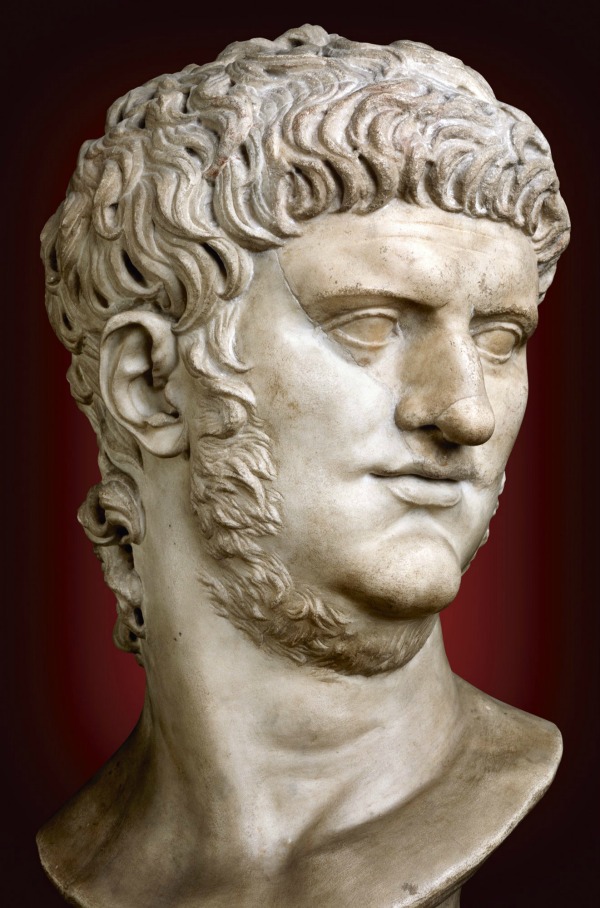
Bust of Nero

I didn’t know too much about Nero until somewhat recently. I knew he was a madman and an emperor, but not much more. During a visit to his golden palace in Rome (you can read about it in the Underground Rome section of my new book Glam Italia! 101 Fabulous Things To Do In Rome, available on Amazon.com) I was asking my guide, an archaeologist from the site, some questions about him. She pulled me to the side and very emphatically told me Everything you know about Nero is wrong! I am down here with him every day. I know him! They have lied about him and I know the truth.

Which is why I say I didn’t know too much about him until then. It would appear the senate changed the stories of more than one emperor once he died, so maybe we will never know the full truth, but her urgency got me interested in Nero and I plan on tracking her down when I get back to Rome to get the next part of the story.

RELATED POST: 14 Fascinating Facts About Piazza Navona In Rome

Who Was Nero?

bust of Roman emperor nero
Nero

Nero was the last emperor of the Julio-Claudian dynasty. He was born December 15 in 37 A.D and died June 9th in 68 A.D at the age of 30. He ruled the empire for 13 years and 8 months.

A Guy With Mommy Issues…

Nero’s mother, Agrippina the Younger was an interesting character. He was adopted by his great uncle Claudius and became the her and successor upon Claudius’ death. Agrippina is thought to have had a hand in the death of Claudius and in Nero’s nomination to be emperor. Apparently she dominated his early life and weighed heavily on all of his decisions a.k.a. controlling mother/stage mom. Five years into his reign he had her murdered.

… And A Guy With Many Wives

The story of Nero’s marriages is intriguing by itself. First he married his step sister Claudia Octavia, daughter of Emperor Claudius.

bust of Claudia octavia first wife of nero
Claudia Octavia

It was a very unhappy marriage (because he was nuts) and he tried to strangle her on more than one occasion. While married to her he had many affairs including one with Poppaea Sabina, the wife of his friend Ortho.

poppaea sabina was nero's 2nd wife
Poppaea Sabina

Poppaea divorced Ortho and became pregnant with Nero’s child, which in turn prompted Nero to divorce Claudia and banish her to Campania. The baby died at 4 months old.

Claudia complained about her banishment, so Nero had her maids tortured. The people of Rome like Claudia and marched in the streets to have her returned to them, which scared Nero so he not only had her brutally murdered but also had her head chopped off and sent to Poppaea.

Nero and Poppaea had a tumultuous relationship but it would seem that she was his favorite wife, even though he ended up killing her too. In the summer of 65 A.D Nero kicked a pregnant Poppaea in the belly, killing both her and the child. After her death he went into deep mourning.

Statilia Messaline was Nero's 3rd wife
Statilia Messalina

While married to Poppaea Sabina Nero had been having an affair with another married woman, Statilia Messalina. When Poppaea died in 65 A.D Statilia’s husband was forced to commit suicide so that Nero could marry her.

And then things got even crazier.

In sometime around 66 A.D-67 A.D Nero also married a young boy called Sporus, who bore a remarkable resemblance to Poppaea. Nero had Sporus castrated and paraded him around dressed in the clothing of a Roman Empress, and called him Lady, Empress, Mistress, and Poppaea. It is thought that he used his marriage to Sporus as a way to assuage his guilt for killing Poppaea.

Sporus was a boy nero had castrated and then married
Sporus

After Nero’s death Sporus was then taken on by Praetorian Guard Prefect Nymphilius Sabinus who treated him as a wife and also called him Poppaea. Nymphilius wound up getting killed by his guardsmen, and the story got even crazier when in 69 A.D Poppaea’s ex husband Ortho, who now became emperor albeit for only 3 months, then took up with Sporus!

Sporus ended up committing suicide to avoid being used as a victim in a gladiator show. He was probably not even 20 years old at the time.

But back to the wives of Nero, there was actually one more. Back in 64 A.D after a series of banquets during the Saturnalia Nero married one of his former slaves, a freedman named Pythagorus. Except this time Nero was the bride and Pythagorus the groom. Nero even wore a bridal veil! After the ceremony the witnesses had to watch the consummation of the marriage too.

RELATED POST: 7 Tips You Need To Know before Traveling To Rome

The Rule Of Nero

Nero’s time as emperor is generally associated with tyranny, compulsive behavior and extravagance. (As well as lunacy). Many historians believe he started the great fire of Rome in 64 A.D to clear the way for him to build his gigantic pleasure palace, the Domus Aurea. Apparently he blamed Christians for the fire and had them burned alive.

There are modern historians however who believe the ancient sources who wrote about Nero were unreliable. The archaeologist I went through Domus Aurea with is convinced that the history we know of Nero is in fact based on lies and hatred, not the truth.

The Domus Transitoria

Nero’s first palace, the Domus Tansitoria is now open to the public after a 10 year renovation.

Stairway down to nero's Domus Transitoria
The stairway down to Domus Transitoria

Transitoria was a lavish palace decorated with marble, inlaid marble, porphyry, mother of pearl, frescoes and mosaics, dating back to 54 A.D. It connected the Palatine Hill with the Esquiline Hill, which is how it got its name. It was built partially underground to help Nero beat the Roman heat.

RELATED POST: How To get Into Rome From Fiumicino Airport
Ceilings at Domus Transitoria
ceilings inside Domus Transitoria

Most of the Domus Transitoria was burned to the ground during the great fire of Rome in 64 A.D. The ruins were discovered, robbed and looted during the 18th century.

Frescoes in neros's first palace, the Domus Transitoria
2000 year old frescoes inside Domus Transitoria

What remained has been restored, so you can see the floors, frescoes and structure. One of the best preserved areas of the complex contains the 50 communal toilets thought to have been used by the slaves and workers, almost 2000 years ago.

Domus Transitoria

You can take a guided tour of Domus Transitoria, but the tours are for small groups only, around 12 total. There is new lighting down there, so you are not wandering in twilight. There is also a virtual reality component to the tour. This is something that Rome is doing so brilliantly, the multimedia and V.R. components to the newer tours are just sensational.

Nero's Domus Transitoria
RELATED POST: WHY YOU NEED TO VISIT PALAZZO VALENTINI IN ROME

Domus Transitoria is open Friday – Monday and is part of the new SUPER Foro-Palatino ticket. Check the website for more details and ticket options.

Bonus Content

Would you like to enjoy a cold prosecco with a mesmerizing view while in Rome? I have created a downloadable PDF of the Best Rooftop Bars In Rome. Each of these fabulous spots is right in the heart of the city and easy to get to, especially after a long day of sightseeing! Download your PDF here
728x90 Get Quote

14 Top Foods In Tuscany You Need To Know About

Are you planning a trip to Tuscany, or maybe just dreaming about one? Any trip to Italy is defined by the food you eat while there. Food (along with wine) is at the heart of Italian culture. Italian life and history all begins at the dinner table, so to understand this magnificent country you need to understand the cuisine.

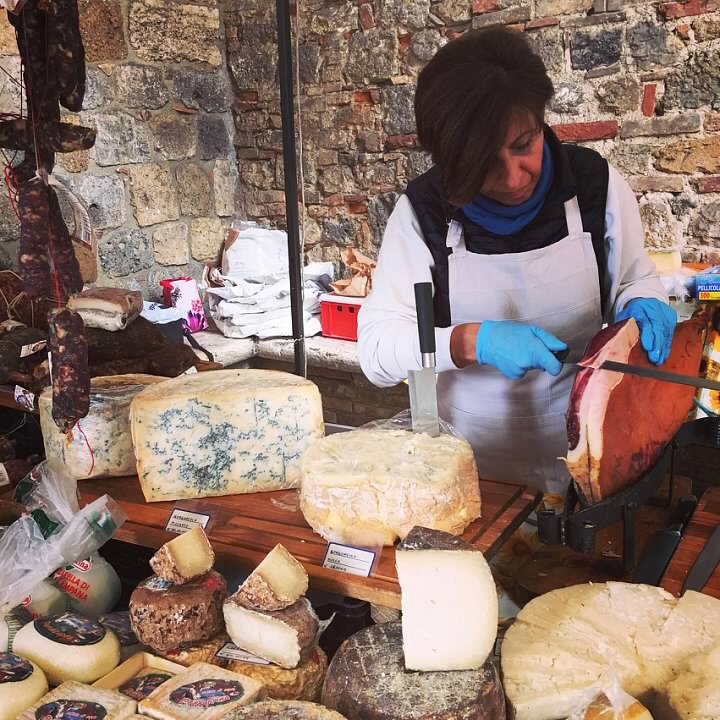
fresh cheeses and prosciutto at the local market in San Gimignano, Tuscany
Market Day in San Gimignano, Tuscany

First it is important to understand that food here is entirely regional. It is not like “Italian Food” in America, which is typically made up of heavy pasta dishes drowned in cheese and sugary tomato sauce, and doesn’t vary much no matter where you are.

One thing I have learned from years of private tour guiding is that many travelers expect to find lasagna, fettucine alfredo, baked ziti and foods like that everywhere we go. Fettucine alfredo is American, not Italian. Lasagna, although readily available at tourist restaurants is not a national food, and I have never seen baked ziti anywhere in Italy!

My book Glam Italia! How To Travel Italy: Secrets To Glamorous Travel (On A Not So Glamorous Budget) has an entire section on foods and wines by region, and tells you what to order, where. The food is vastly different in Florence and Rome for example, and you don’t want to miss out on an incredible local dish because no one told you! My new book Glam Italia! 101 Fabulous Things To Do In Rome tells you all about what to order in the Eternal City, and goes into much more depth.

If you are heading to Tuscany (ever) you need to know about the cuisine and what you absolutely must try while you are there. Tuscan cuisine is one of my personal favorites. Known as cucina povera, (poor people’s food), Tuscan food is locally sourced (nostrale or ours) tends to be quite simple with few ingredients. It started as a cuisine forced by economy or poverty but has remained that way by choice.

The Top 14 Tuscan Foods You Need To Know

I spend a great deal of time in Tuscany and just love the food there! You see provincial differences as you travel across the region but the following foods tend to be available in most areas and are definitely worth seeking out. Lets start with cheeses:

1. Pecorino

Pecorino cheese from Pienza in Tuscany
Pecorino cheese from Pienza

Every local market will have vendors selling slices of pecorino from giant wheels. It is fantastic on its own or drizzled with a little local honey. I also love the piquant pecorino with peppers or chilis, and the pecorino tartufo flavored with local truffles.

2. Ricotta

One of my friends serves this every time I come for dinner. Don’t confuse Tuscan ricotta with the stuff you buy here at the supermarket – that’s like comparing a beat up ’81 Fiat Panda with a tricked out brand new Ferrari. The 2 ricottas share a name only.

You can find fresh Tuscan ricotta at local markets as well as on the menu in many restaurants. Ideally you want fresh ricotta from the farm. It almost looks like a cake or a jello mold, and you slice it and drizzle fresh local honey over it. Sometimes it is sprinkled with nuts. You will be hooked at first bite – it is unbelievably good!

RELATED POST: TUSCANY BY TRAIN – THE BEST DAY TRIPS FROM FLORENCE

Soups

One of the reasons I just love being in Tuscany in the winter or early spring/late fall is because of their hearty soups. Even in the summer if we get an overcast or rainy day I always find my way to a bowl of Tuscan soup. Both the soups below are very traditional and in my opinion can also be filed under Tuscan comfort foods.

3. Pappa al Pomodoro

pappa al pomodoro soup is a tuscan specialty
Pappa al Pomodoro soup

You can’t get more cucina povera than this soup! Yesterday’s leftover oven baked bread, olive oil, garlic, basil and tomatoes. Sometimes it has more of a mush than soup consistency, but however it comes it is incredible.

4. Ribollita

ribollita soup at eataly
Tuscan Ribollita soup at Eataly

This is another peasant soup that will fill you up and warm your soul. This time yesterday’s leftover oven baked Tuscan bread is mixed with cannellini beans and vegetables.

5. Fagioli con Salsiccia

Tuscan fagioli con salsiccia - a must have tuscan food
Fagioli con Salsiccia

This is a soup made of beans and sausage, normally a local spicy sausage.

6. Breads

Every area within Tuscany has its own breads, and really, you should try as many as you can! Before you panic about gluten and swelling up from eating carbs – don’t worry it’s all good! Unlike here in the U.S. wheat in Italy is uncompromised. They don’t have Monsanto filling the wheat with pesticides and they don’t have GMO’s, so even the most sensitive digestive systems seem to do just fine. Personally, I can’t eat bread in the USA, I swell up, get an upset tummy and feel like hell. In Italy I can eat it every day with no problems.

I love buying breads at local markets to take home to my apartment, but if you’re not doing the vacation rental thing at least make sure you always at least try the bread in restaurants.

7. Panzanella

Before we leave breads behind you need to know about this bread salad. Once again it uses yesterday’s bread, this time soaked in olive oil, mixed with fresh tomatoes and basil and dressed in olive oil with maybe a little vinegar. I’ve had it with olives in there too – I think it varies depending on where you go. Sometimes when lunching at friends’ homes they have served up variations on the traditional panzanella with sliced red onion, cucumber and lettuce. However it is served, it’s fantastic!

panzanella is a tuscan salad made with bread, tomatoes, garlic and olive oil
Panzanella salad
RELATED POST: 10 THINGS YOU ABSOLUTELY MUST DO IN LUCCA

Pasta

Each area of Italy has its own types of pasta. The size and shape of any given pasta is based on the type of sauce it is served with. One traditionally Tuscan pasta that you will find on almost every restaurant menu is pappardelle. This is a wide, ribbon type pasta, served with heavier meat sauces.

Tagliatelle is another local pasta seen on menus everywhere. Also found all over neighboring Emilia-Romagna, tagliatelle is a narrower ribbon than pappardelle.

8. Pappardelle con Cinghiale

the king of tuscan pastas, pappardelle con cinghiale. This is a wild boar sauce served with flat ribbon pasta
Pappardelle al Cinghiale

This is the king of pastas in Tuscany! Cinghiale is wild boar, the taxidermied versions of which you see everywhere. Don’t panic – it doesn’t taste gamey, it’s just incredibly hearty. Every restaurant has its own recipe and way of preparing its cinghiale, so you can have it every day (as my son has done) and never have it quite the same way twice. This is really, really good, and if I were to recommend only one traditional Tuscan food for you to try, Cinghiale would be it.

9. Tagliatelle con Tartufo

Tuscany is truffle country, so when truffles are in season you will find this dish everywhere. Again, each restaurant seems to have their own recipe, so you can eat it everywhere you go and it will always be different, but also will always be super good.

tagliatelle al tartufo i a must eat food from Tuscany.
Tagliatelle con Tartufo

About pastas: I’ve seen cinghiale served with either pappardelle or tagliatelle, so it may also be a restaurant’s personal preference.

Italians typically eat multiple courses, way more than I can handle. If I am ordering pasta I normally don’t order anything else. That bowl alone will fill you. Also, if planning on ordering pasta I exercise extreme caution with the antipasti when it comes out – it is so easy to fill up snacking on meats and cheeses and olives!

RELATED POST: HOW TO ORDER COFFEE IN ITALY

10. Bistecca Fiorentina

bistecca fiorentina, tuscany's steak from Chiana Valley
Bistecca Fiorentina

You will see giant steaks in restaurant windows all over Florence and nearby town. These are the famous steaks from the Chiana Valley. Each one is 3 to 4 lbs on its own – they really are enormous! So big in fact that they not only cook them front and back but also on the sides. If you are a meat eater this is a must try food.

11. Cacciuccio

This is a Tuscan fish stew, and you are more likely to find it closer to the coast, especially around Livorno. Traditionally it has 5 different types of seafood, from fish to shellfish, one for each C in the name. Fishermen would clean out their boat at the end of market day, and whatever was left in the bottom would be thrown into Cacciucco. The stew would have broth, garlic, pepper flakes and red wine vinegar and would be served over toasted bread.

cacciuccio seafood stew from Livorno Italy
Cacciuccio from Livorno

To this day it is served the same way, the bread soaking up the broth. If you love seafood, this one is amazing.

12. Tuscan Pizza

Pizza is different everywhere you go in Italy, from the chewy base in Napoli to Rome’s super thin crust to Tuscany’s not-quite-as-thin crust. Always cooked in a wood burning oven, you have to try pizza in Tuscany at least once. This could not be more different to typical American pizza. Not drowned in sugary tomato sauces, and not weighed down by heavy melted cheese, Tuscan pizzas tend to be fresh and light.

pizza in tuscany
Tuscan pizza

Don’t expect American pepperoni – pepperoni in Italian means giant bell peppers. Don’t be surprised to see raw rocket (arugula) scattered across the top of a pizza. It tastes so amazing!

Most of the time you won’t find pizza served at lunchtime. Pizza is prepared in wood burning domed ovens that take hours to heat up to the correct temperature of 485 Celcius/905 Fahrenheit. When thinking about having pizza plan it for no earlier than 8:30 at night, and ideally at a restaurant with an outdoor patio.

My favorite evenings in San Gimignano are spent on the terrace at Il Trovatore around a large table with my Glam Italia Tour ladies or local friends, eating their insanely good pizza, drinking jugs of wine, and talking all night long.

RELATED POST: HOW TO USE THE TRAINS IN ITALY

Sweet Things

I have 2 favorite sweet foods in Tuscany, one is a day time food and one happens at the end of a long, satisfying Tuscan dinner.

13. Panforte

This is not a strong bread (pan-forte), it is a spicy cake. Its origins date back to 1205 when servants had to take it as gifts to the nuns of Montecelso Abbey in Siena. Overtime it became a Christmas gift to the nuns and a treat aristocrats would enjoy on special occasions. Made from sugar and honey and nuts and dried fruits with pepper and spices (cloves, ginger, cinnamon) panforte is typically cooked in a shallow pan, dusted with powdered sugar, and served in narrow slices with coffee.

Panforte di Siena
Panforte

This is a Sienese specialty, and in my humble opinion it is a crime to go to Siena (or Florence) and not at least try it. Panforte is my favorite thing – I love it with coffee in the morning. Despite the sugar and honey it is a guilt free food because you walk so much over there you burn it off before lunch!

Note: you can actually eat it all day and night. The morning thing is just my favorite. If I allow myself one sweet thing, in a toss-up between having a gelato at some point in the day or a slice of panforte, the panforte will always win.

14. Cantucci

At the end of a long Tuscan dinner you may be served with a couple of cantucci and a short glass of dense dessert wine called vin santo.

Cantucci are small crunchy almond cookies that look like mini biscotti. (The word for cookie in Italian is biscotti, so if you want to get technical, they are biscotti). You dip the cantucci (or cantuccio?) into the vin santo ad then take in your final calorie hit of the day, as if your tummy wasn’t already about to explode.

cantucci and vin santo, the perfect way to end a meal in Tuscany
Cantucci and Vin Santo

I have learned over the years that I cannot eat like an Italian. As in I can’t do all the courses they do. I’m good with just antipasti! Truth be told, on most nights out in Tuscany I don’t have room for cantucci unless I have planned it in advance. If you, like me, feel like you cannot possibly ingest even one more mouthful, then I am sorry my friend because at least once while you are there you’re going to have to take one for the team and at least try cantucci and vin santo

Traveling to Florence? Download my free Secret Florence PDF and find out which are my favorite restaurants, the best secret bars, secret jewelers and other fantastic things to see and do in Florence. Any of the items on this list will take your trip from great to completely fantastic! Download your copy here

Essential Florence Travel Guide
Share Or Save This Pin:

How To Get From Rome Airport To The City Stress Free

Are you traveling to Rome anytime soon? One of the questions I get asked all the time about traveling to Rome (and other parts of Italy) is how to get from Rome Fiumicino airport into the city.

Al Italia Planes at Rome Fiumicino airport
Al Italia planes at Rome Fiumicino airport

It can be nerve racking trying to figure it out by yourself if you haven’t been there before. But don’t worry – not only is it super easy, you have several options at a variety of price points. Assuming you will be overnighting in Rome, let’s check out some options:

1. Your Landlord or Hotel

The first thing to do is check if your vacation rental or hotel has a car or shuttle service. Most don’t have shuttles but in general they have drivers they work with and refer to their clientele.

The cost for a private driver to be waiting at the airport to greet you and bring you into the city is 50 euros. This is a standard rate, don’t pay more than 50.

RELATED POST: 10 THINGS YOU ABSOLUTELY MUST DO IN ROME

2. Private Car Service

If your accommodation can’t provide someone, check online for car service companies. I always, always double check them on Trip Advisor. They should have tons of great reviews across a decent stretch of time. Make sure you actually read the reviews, and check for details such as is there repetitive language (if English is not the primary language scammers will make the same grammatical mistakes over and over).

Two of the well know private car companies are Welcome Pickups and Kiwi Taxi. I haven’t used either as I have my own drivers from my tours, but both have a great reputation. Just make sure you read reviews before booking.

In Italy vendors take Trip Advisor very seriously. They proudly post stickers on their businesses and many will ask you to write a review for them. Honestly it makes everything so much easier!

Car service/private drivers are often (but not always) minivans. If there are several of you make sure you check at the time of booking. The standard rate door to door is 50 euro.

Don’t ever go with someone who solicits you at the airport. The legit companies, both private drivers and taxis, don’t have people approach people at the airport. Ever. Anyone who approaches you offering car service or taxi service is up to no good.

3. Taxis

Taxis at Fiumicino airport are regulated. Rome’s taxis are white with a taxi sign on the roof and the city taxi insignia Commune di Roma, and numbers on the doors and the back, as well as inside the car.

You pick up your taxi from the taxi rank outside the terminal. They are single file, and all look the same so you won’t make a mistake.

There is a flat fare from the airport to the city, 48 euros. This includes luggage.

taxis at Rome Fiumicino Airport
Taxis at Rome Fiumicino Airport

If you are not going inside the city walls then your fare will be metered and there will be a fee per bag, but 99% of the time you will be staying inside the walls. You need to make sure you are being charged the flat rate before you get in the taxi.

I here lots of stories about people getting scammed by taxi drivers, but as much as I use cabs in Rome I have never ever had a problem.

One thing to bear in mind with taxis is that most of them are small. If there are several of you, you will either need to take multiple taxis or use a car service.

RELATED POST: 7 TIPS YOU NEED TO KNOW BEFORE TRAVELING TO ROME

4. Uber

Unlike Paris where there are Ubers everywhere, in Rome they are fewer and further in between. I sometimes hear they are being outlawed but as far as I know they still exist. They don’t offer regular uber service though, and the fare from the airport into town is around 65 euros, making it the most expensive option.

5. The Leonardo Express

If I don’t use a private driver/car service I use a train + taxi combination.

From Fiumicino there is an express train inside the terminal that brings you into Rome to the main train station, Termini Station. The Leonardo Express departs every 15 minutes throughout the day and then every 30 minutes during the early morning and late evening. It takes 32 minutes and costs 14 euro.

Leonardo Express train at Rome Fiumicino airport

Once you arrive at Termini the main taxi stand is at Piazza Cinquecento, straight through the main doors of the station.

Another option is to turn right as you leave the platform area and walk through that entrance (which is what I do) and you will see a taxi stand on your left.

Again you will be approached by people offering car service and taxis. The legit taxi drivers can’t do that. They pull into the taxi ranks in the marked areas, in official Rome taxis.

One word of warning, last summer my flight was delayed and I arrived into Termini late at night. There were no taxis at the train station. I was on my way to Florence and missed the last train, so had to get a hotel for the night (thank God for the Hotels.com app) I was able to walk down the street to the hotel, but it could have been problematic had I been going further.

RELATED POST: HOW TO USE THE TRAINS IN ITALY

6. Trains

When I fly into Rome but am heading to another city I take the Leonardo Express to termini and then pick up my next train. It is super simple and efficient.

New Train Service

In December 2018 a new train service started, taking you in one step from Fiumicino airport to Florence and Venice. I haven’t used it yet and haven’t spoken to anyone who has, so can’t review it. (yet!)

You can find it on the Trenitalia website. At the time of writing this post there were few direct trains per day, most of the options use the Leonardo Express and Termini station, but keep an eye on it – I am sure they will add more trains as the service gains popularity.

Local Trains

There are local trains that will bring you into the city very inexpensively (around 8 euro) but they stop at multiple stations and you will probably need to catch a taxi from the station. Also the small stations don’t always have elevators, so you may end up dragging suitcases up and down stairs.

7. Buses

There are bus companies that bring you into the city but again I haven’t used them. Once you are in the city you will still need to get a taxi to your hotel/apartment, so I’m not sure there is any good reason to use them. They take longer than other transport to bring you into the city, but at only 5 euros per person are the cheapest way in. The bus stops at two places, Piazza Cavour and Termini. Terravision is a well know bus/coach company that does the airport to city run. The coaches are nice and modern and store your luggage underneath.

RELATED POST: 15 FABULOUS BOOKS SET IN ITALY

Recommended

You need to remember that chances are you will arrive to Fiumicino airport exhausted from your international flight, so you want to make your arrival as easy as possible. It can be well worth your while to book a private car service to take you door to door, especially if there are more than one of you. The cost of the Leonardo Express for 2 people is already 28 euros, add a taxi at the other end and you will have spent more than 50 euros anyway.

Even though I have traveled in and out of Rome more times than I can even remember and know the city pretty well, if I were arriving at night I would have a driver meeting me at the airport.

My new book Glam Italia! 101 Fabulous Things To Do In Rome comes out soon! Join my Private Members Newsletter to get updates and discount options. You definitely want to read this book before traveling to Rome!

Are you planning a trip to Rome? Download my free PDF of The Best Rooftop Bars in Rome HERE

Avoid the tourist crowds and discover amazing things to see and do in Rome! My internationally best selling book Glam Italia! 101 Fabulous Things To Do In Rome introduces you to fantastic secrets hiding in plain sight, right in the heart of the historic center of Rome. It will make you fall in love with the Eternal City. Get your copy anywhere in the world on Amazon.

Verified by ExactMetrics