
International Travel With Bitcoin

Are you wondering how to handle your money when you travel internationally? I get asked about it all the time.

I also get asked about how to handle pickpockets stealing your cash or credit cards. Touch wood, so far I’ve been safe.
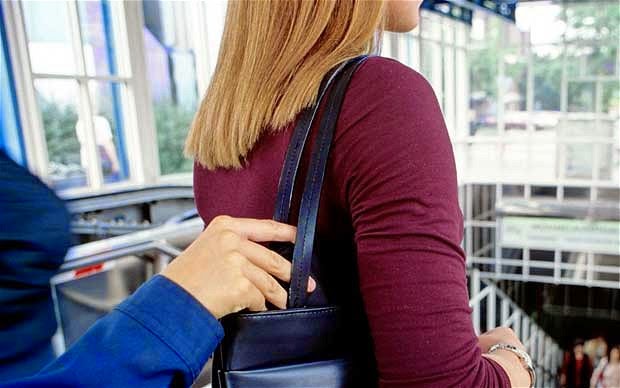
pickpocket-robs-woman

When I first started travelling internationally the entire money equation was a headache. You had to use International Travelers Cheques, which you would purchase in the currency/currencies of the country/countries you were traveling to, which was often a complete nuisance.
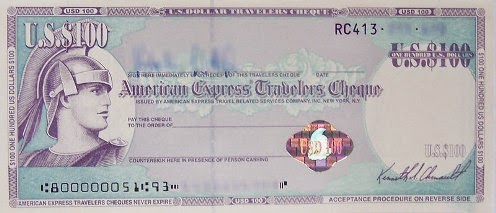
International-Travelers-Cheque-America-Express

You needed to wear a money belt under your clothes and keep your travelers cheques, passport and extra cash in it for safe keeping.
You had to keep meticulous details on your travelers cheques – which you had cashed, and where you cashed them, in case your cheques were stolen.
If you had American Express travelers cheques you were OK because they would replace them within a day or two, but other companies were terrible, and you could be stuck out there in the world with no money for days on end.
You also paid a fee to get your travelers cheques, and then at the money changing places you would pay another fee to cash them.

Now we travel with plastic, but not all cards are created equal, and
you have to be very careful which cards you travel with.

Related Post: Should You Get Travel Insurance?
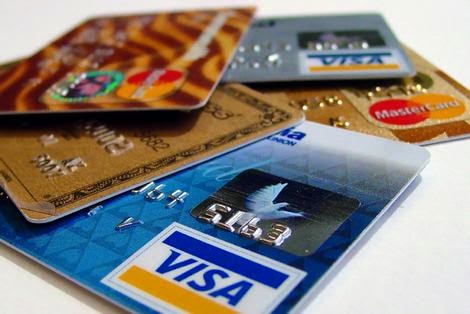
 

credit-cards

Currencies fluctuate from day to day and throughout the day, but you seldom get the actual official exchange rate when you swipe your card.
Banks get really liberal with the numbers and are generally substantially different from the official rate. My bank is generally at least 6% higher than the official exchange rate, so I lose at best 6 cents on every dollar I exchange.
So in general, I don’t use them.
When you charge something to a credit card you will pay multiple fees – sometimes from the local merchant, your bank will always charge you for using the card overseas, an exchange rate that is nowhere near the actual rate for the day, and a conversion fee. So if you are using a credit card, only use it for the big expenses. Also, unless using American Express you may find your credit card protection against faulty purchases, items broken in shipping, or shipped items that don’t arrive, is either sketchy or non existant when dealing with a foreign purchase.


shipping-ceramics-from-sicily
Ceramics purchased in Sicily arrived broken, Visa wouldn’t help.

Last year I shipped ceramics from Sicily, some of which arrived broken. The merchant suddenly didn’t speak english anymore, and Visa wouldn’t reverse the payment, or help me at all.
(I wrote about it HERE) I specifically used a Visa card because I wanted a layer of protection.
But in the end I paid all those excessive credit card fees for nothing.

Related Post: 10 Fantastic Bitcoin Travel Tips

Debit cards are ideal, but also come with their share of headaches.
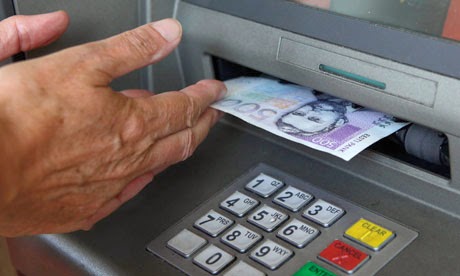
 

travel-with-debit-cards

Firstly you have to find out what your bank charges you for walking up to a foreign ATM – there will be a fee and it is often a steep one. Also you may get charged by the local bank for using their ATM. You do however get the best exchange rate.
I use a credit union debit card as it has really low rates.

One thing I am looking into for international travel is Bitcoin.
Bitcoin is a crypto currency that is used digitally, and not affiliated with any bank, or any single currency.
I am looking at Xapo.com for bitcoin as they not only let you utilize a bitcoin wallet  (click link for information) but they also have a Xapo debit card, which you can use anywhere that accepts cards. Many major cities have bitcoin ATMs too.

One of the benefits of traveling with bitcoin is that lack of bank fees. Bitcoins instantly convert to the currency of the country you are spending them in, so all you pay for is the items you are purchasing.
Another benefit is that with credit cards, merchants can wittingly or unwittingly share your payment credentials, exposing you to fraud. Plenty of travelers have had thousands charged to their cards or had access to their cards shut down while traveling due to fraud. Xapo.com is the leader in Bitcoin security, so you have that extra peace of mind when you are making purchases.

If you are relying solely on credit and debit cards when you are traveling you can find yourself in a world of trouble if your cards get lost or stolen. If you are in a major city such as Paris or Madrid, your bank can take days to replace your lost card, but it will probably get one to you.
If you are anywhere remote, such as a small town or worse still on honeymoon in Bora Bora, there is absolutely no guarantee a replacement card will get to you prior to your trip ending.

Related Post: 7 Great Travel Hacks – How To Travel The World On A Shoestring Budget

Having a bitcoin account as a backup is a brilliant idea – if your cards are stolen you can still access money. And if you make purchases with your bitcoins you avoid all the credit card fees.

“Bitcoin perfectly acts as a single cross-border payment token that doesn’t ask hefty commissions or any sort of conversion charges. So selling a coffee on an on-board flight, or paying a restaurant bill in a foreign country becomes instantly easy, without relying on exchanging currencies firsthand.”

Xapo.com Bitcoin is really easy to use. You simply download an app to your phone. At any time while you are traveling you can add money to your bitcoin wallet from your laptop. All you need is an internet connection.

Although I don’t think that at this point I could exclusively use Bitcoin for international travel, I do think it will become the way of the future.
I would however love to try taking a trip exclusively with bitcoin and see how well I do – wouldn’t that make a fabulous live blog series??

For more information on traveling with Bitcoin, check out this article on the Benefits Of Bitcoin For International Travel


To purchase Bitcoins, or to get more detailed information on the crypto currency, check out www.Xapo.com

If you have traveled with bitcoin, or if you have a bitcoin story to share, please tell us about it in the comment section below.

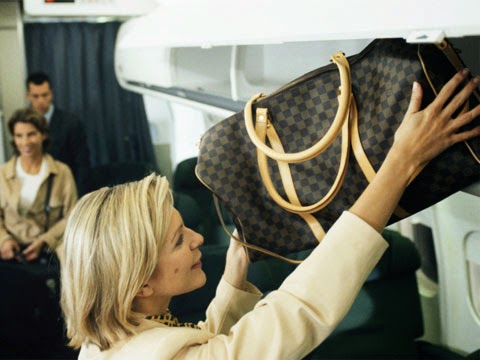
International Travel Tips ~ Essential Items To Have In Your Cabin Bag

International Travel Tips – Essential Items To Have In Your Cabin Bag.

image courtesy of http://nyloncarryon.blogspot.com/2013/02/blog-post_19.html
not cabin bags, but I loved the picture!

With the first ever Corinna B’s World Glam Italia Tour
getting ready to take flight,  (well, it’s a month away, but will be here in no
time at all) I’m making lists for the ladies of things they need to pack.

They’ve never traveled internationally before, or to a
country that functions in a different currency and a different language. Maybe
you have, or maybe you haven’t, either way here is a mini check list of
essential items to have in your cabin baggage.

Essential-Items-To-Have-In-Your-Cabin-Bag
image courtesy of Aviation With Style

1.    An International Power
Adaptor

You can pick these up super
cheaply now – I think they’re only around $10. I have one in my regular luggage
as well as one that goes on board with me.

You never know when you will have
unexpected delays in airports, be rerouted to a country you hadn’t planned on,
or maybe your luggage takes a different route than you do, but with a power
adaptor that can be adapted to different countries you can at least charge your
phone while you are waiting.

2.    A Car Charger For Your
Phone, iPad, Laptop

Last year I forgot to pack a car charger
for my phone. It’s a small thing, but comes in super handy. You may not have
access to a regular power point in the airport – others maybe charging their
phones too. Even if you’re not driving, the person who is driving you, be it a
cab, an airport shuttle, a business driver or a friend, can let you plug in and
poer up. 

Having the option to get some juice into
your phone before you hit your final destination can be a God send.

3.    Local Currency In Small
Denominations

Always have cash on hand in the
currency of the country you are flying to, and have it in small denominations.
You can’t rely on there being a cash machine at the airport. Maybe it’s not
working, maybe there is a line around the corner, maybe it eats your card,
maybe it won’t read your card – there are so many things that can happen that
get in the way of your first plan for getting cash.

Also having small denominations is
essential. Not everywhere is going to be willing to break your paper money or
larger denominations.

I once got refused buying a bottle
of water because I only had a 5 euro note and the shopkeeper wasn’t willing to
blow out all her change. Since then I always have coins for currencies that
have higher value paper money. Some countries start their paper money at the
$5/5 euro mark.

4.    Photocopy Of Your Passport
Main Page

Things happen. Maybe you left your passport
somewhere or maybe it got stolen. Either way if you don’t have it you can have
a major problem. Having a hardcopy photocopy of your passport can be a huge
help, both with your embassy, and with airport authorities.

Keep it somewhere separate from the rest of
your travel documents, so that if your handbag is stolen or your wallet is
stolen you still have your passport details.

Don’t rely on having the image on your
smart phone. You may not be able to power it up, you may not have any internet
service or wifi where you are. A hardcopy is always a good thing to have.

(While you are at it photocopy your credit
cards/bank cards too. If you lose one or have it stolen it’s another fast way
to resolve the problem)

5.    Pack A Small Bag For
Inflight Needs

Before I put my cabin baggage into the
overhead bin I get out everything I need during the flight and slip it into a
smaller bag or a plastic bag. Books, headphones, beauty bag etc). Once that
cabin bag is in the overhead bin you shouldn’t get it back out until the flight
has landed.

6.    A Beauty Bag

You need skincare and makeup products, plus
a couple of hair essentials, toothbrush etc both so that you can take care of
your skin and  pretty on up before you
land, and also because your main luggage may not make it to where you are
going, or not get there at the same time as you.

If your luggage doesn’t arrive with you,
you need to be able to clean up, brush your teeth and feel good until either it
gets there or you can buy the replacement products you need.

7.    Clean Undies And A Change
Of Clothes

As with #6, if your luggage doesn’t arrive
with you it’s nice to be able to change into something clean. Especially when
traveling internationally you tend to have a lot of hours between leaving your
house and arriving at the new destination. The thought of spending yet another
day in the same clothes is awful.

(One of
my friends once got puked on by the child sitting next to her – I always want
to have something to change in to if something like that were to happen to me!)


Check out this post on Aviation With Style. Its 20+ Tips Your Flight Attendant Won’t Tell You, but wishes she could. Read it here

How To Make An International Flight Easy

I would love to know exactly how many miles I have racked up flying round and round the world in my lifetime.
Sometimes I can’t even believe how many miles I fly in one calendar year.

Regardless of whether you are making your first long haul flight, or if you are a veteran, there is most definitely a way to make it an easy, (relatively) comfortable experience. I can’t be bothered with jet lag, and at least on my outbound trip I want to arrive refreshed and ready to go.
So here’s what I do

1. Make a sleep kit
Whether you buy one ready made, or make your own, set yourself up to win with everything you need to sleep.
An eye mask to block out the light
A neck pillow (although these days airline seats have head rests that totally support your head, so I almost never bother dragging one around with me)

Earphones. Get noise cancelling if you can afford them, like the Bose QC15 . Look for something that is comfortable and that covers your ears (as opposed to earbuds). Anything that blocks out the hum of the engines and as much of the other ambient noise as possible. If you don’t have noise cancelling headphones, plug in to one of the yoga/zen/rainforest channels that all the airlines seem to have – it will help block unwanted noise and put you to sleep.
A blanket. I’ve traveled with the same giant pashmina for more than 12 years now. Its soft, very very lightweight, but warm. It also takes up no space at all.
Airline blankets can be scratchy, and don’t always keep you warm enough. Some airlines even charge extra for a blanket. I prefer to bring my own.

2. Check Bags

It takes forever for a plane to board, largely because so many people drag on too much cabin baggage. Pack a bag with enough to last you a couple of days in case your bags don’t arrive with you. Be mindful of security rules on sizes of liquids etc. Packing only what you need to get you through the first couple of days in your cabin bag and checking the rest can streamline your experience getting through security and onboard the plane.
Rules change from airport to airport, so rather than deal with any hassles at the xray, I prefer to check as much as possible.

3. Drink Tons Of Water

Probably the most important item of all is to drink as much water as possible. The biggest part of jet-lag is getting dehydrated. You lose an additional 8 oz of water for every hour that you are up there, so its crucial that you drink as close to a glass of water for every hour of the flight.
  
4. Pack Healthy Snacks
Or at least check the airline’s menu ahead of time. Sometimes there are healthy options – but mostly not.
Pre-sliced fresh fruit, unsalted nuts etc will serve you better than the high carb, high sugar, highly processed snacks and foods on most long haul flights. Be mindful of how much you eat too. Its super easy to overeat when you’re sitting there for 10 or 12 hours.

5. Dress For Success
Wear comfortable clothes that you can layer up and layer down. Be able to work with however hot or cold the cabin is both during flight and also when sitting on the tarmac. Comfortable shoes (and socks!) are a must too. I’m a big believer in flying in comfortable clothes, but also in always looking stylish and well put together. 
Airlines frequently oversell seats and have to upgrade passengers. I always want that upgrade. No matter how much of a model citizen you are, if you’re not dressed nicely you won’t get that upgrade.

6. Sit Down, Shut Up, Powerdown. 
The flight can’t take off until everyone is seated, belted in, and all electronics are powered down.
More so on domestic flights rather than internationals it seems to take forever for people to just sit down and do as they’re told. And there is invariably some tool who feels the need to talk on his cellphone at full volume throughout the process. 
Make it easier on yourself and everyone else by streamlining the process. Once you’re in your seat don’t get back up to get anything out of the overhead bin until the flight has taken off and the seatbelt lights are turned off.

Verified by ExactMetrics