What You Need To Know About Jubilee Year In Rome

You may have heard that this year (2025) is Jubilee Year in Rome, but maybe you don’t know what that means, what it entails, or how it will impact your travel plans. Let’s look at some essential tips for anyone traveling to Rome this year.

Rome colosseum with Glam Italia Photo Presets

What Is Jubilee?

The Jubilee Year in Rome is a special event in the Catholic Church, occurring every 25 years (with occasional extraordinary jubilees), and drawing millions of pilgrims to the Eternal City. The 2025 Jubilee emphasizes spiritual renewal, forgiveness, and acts of mercy. Pilgrims visiting Rome during this sacred year can participate in religious celebrations, special Masses, and the tradition of walking through the Holy Doors of Rome’s four major basilicas—St. Peter’s, St. John Lateran, St. Mary Major, and St. Paul Outside the Walls—which are opened exclusively for the occasion. These doors symbolize a passage to salvation, making the Jubilee an extraordinary spiritual experience.

Jubilee crowds outside St Peter's in Rome, January 2025

How Does Jubilee Year Impact Travelers?

The first thing to know is that Rome is expecting an influx of 35 million pilgrims this year for the Jubilee, on top of the regular 35+ million tourists. This is the first Jubilee since the onslaught of massive tourism in Italy – the last Jubilee was in the year 2000, so to a degree there is a lot of speculation. Will the city get 70 million visitors this year? Possibly. Will it get more than the 37 million who came in 2023? Probably. For travelers planning to visit Rome during the Jubilee 2025, preparation is key.

Jubilee started December 24th 2024 and runs through the epiphany on January 6th 2026. From when Jubilee started until I left Rome on January 9th half a million people had already been through St Peters.

You can expect all the big tourist attractions to be packed this year, especially the main religious sites, such as The Vatican, St Peters, Santa Maria Maggiore, San Giovanni in Laterano and San Paolo Fuori Le Mura.

How To Prepare For Rome During Jubilee

Here are some tips to help you travel to Rome in 2025

Even in peak tourist season it’s easy to escape the crowds in Rome. Check out Glam Italia! 101 Fabulous Things To Do In Rome for details.

1. Book Accommodation ASAP

You may have trouble getting accommodation close to the historic center or the Vatican during the high season, but you could get lucky and find cancellations. Regardless of when you are planning on being in Rome get your accommodation booked now. You can expect prices to be inflated due to the overwhelming demand. Looking outside the main areas, even one neighborhood back can improve your chances.

2. Transport May Be Tricky

The Vatican and the local government have implemented extensive improvements, including better transportation and enhanced infrastructure, to accommodate the surge of visitors. However, expect delays when trying to get taxis, especially during the high season. If you are planning on using a private NCC driver for day trips outside the city, book them now.

The historic center of Rome. Rome is one of the most magnificent cities in the world.

3. Tickets May Be Harder To Come By

The past couple of years have been challenging when it comes to ticketed entry for the big attractions, particularly the Colosseum. If something is really important to you – such as the colosseum, which I absolutely recommend seeing if at all possible, book tickets as soon as you can. I like to use a private guided small group tour for the colosseum as there is far too much detail you otherwise miss out on. There are plenty of sketchy tour providers (including the really big names) so I refer everyone to Liv Tours. Liv Tours offers several different options for Colosseum tours, you can check them out here.

Unless it’s massively important to you, I would be inclined to skip the Vatican, as it will be crowded. Tickets may be much harder to get this year too. If you do go, again I recommend a private tour. Try for either very first thing in the morning, or on a Friday night if available. Again, Liv Tours offer multiple different choices, so check them out here.

RELATED POST: How To Get From The Airport Into Rome

4. Expect Increased Security

Due to the sketchy behavior of multiple tour providers, tickets are now not only timed but also in your name. You need to show photo ID that matches your name as you go in. For many sites you also need to pass through an x-ray security. Factor this in and arrive early. Many sites won’t let you in if you arrive late, regardless of how much money you spent on your tickets. Colosseum tickets will specify which gate you need to go to. Vatican entry is not at St Peter’s basilica, but a ways around the block. Check all the details on your tickets or with your tour provider and be sure to arrive early.

Churches and religious sites require you to be dressed appropriately. Thighs and shoulders must be covered. (Unless you are Kim Kardashian) Most tour providers will not take you in and will not refund you if you arrive inappropriately dressed. You may be asked to leave regular churches if you walk inside with shoulder and/or thighs out. ** it doesn’t matter how much your tickets cost and you will not be refunded.

A short walk from Rome’s historic center you find beautiful Roman streets without the crowds.

5. Avoid The Tourist Traps

I’m going to let you in on a secret here: 95% of tourists to Rome only go to 5% of the cool sites. Which means 5% of tourists to Rome (I’m including you here) get to enjoy 95% of what Rome has to offer, without the crowds! Skip the Trevi Fountain and the Spanish Steps, both of which are pickpocket paradises full to bursting with tourists, and instead visit some of the other truly astounding attractions in Rome..

My best-seller Glam Italia! 101 Fabulous Things To Do In Rome is full of amazing things to see and do in Rome. If ever you have needed this book for planning a trip to Rome, 2025 is the year. You will find all kinds of fantastic things to see and do that are just down the street from the big attractions yet have almost no one there. The best kept secrets are generally really close to the big tourist sites, so you don’t have to travel across town to get to them.

Baths of Caracalla in high tourist season. Almost no one is here. Find out about this and other less visited Roman sites in the book Glam Italia! 101 Fabulous Things To Do In Rome
Rome’s Baths of Caracalla during peak tourist season. A 10 minute walk from the colosseum, you never see crowds at this amazing site.

RELATED POST: 5 Fabulous Places In Rome The Tourist Crowds Don’t Know About

6. Take A Day Trip

Rome is the central hub for trains to everywhere in Italy.

Procida Cultural Capital 2022
Procida Island off the coast of Naples is a fabulous day trip from Rome.

You can easily and inexpensively take a train to multiple cool places that make tremendous day trips or partial day trips from Rome.

Some of my favorites include:

  • Ostia Antica, a mind bending former port city archaeological park, just 30 mins and €2 by train. Check out this tour.
  • Naples and Pompeii. Naples is an hour and 15 mins by train from Rome. You can easily visit Pompeii and Naples in a single day and be back in Rome in time for dinner. Unless you want to stick around for the world’s most famous pizza! Get 101 ideas for fund things to do on a day trip to Naples here.
  • Procida. If you’re in the mood for something beautiful and beauty without the crowds, a day trip to Procida (pictured above) built around an amazing seafood lunch is incredible.
  • Viterbo. This largely overlooked town in the middle of Lazio is a charming, medieval gem. There’s tons to see and do, but it is also a wonderful town to just stroll and enjoy.
  • Orvieto. Escape the crowds in Rome with a 90 minute train ride to one of the coolest old Etruscan cities in Italy. Orvieto is beautiful, atmospheric, and easy to negotiate. It also has one of the most famous and outstanding cathedrals in all of Italy!
  • Arezzo to experience a gorgeous, almost tourist free medieval and renaissance Tuscan town that is well off the mainstream tourism radar.
  • See this blog post for more of the best day trips from Rome

Rome is my favorite city in the world. it is beautiful, exciting, both modern and historical – it has something for everyone. I sincerely hope you pick up a copy of Amazon’s top rated Rome Travel Guide (my book!) Glam Italia! 101 Fabulous Things To Do In Rome. This extraordinarily popular travel guide shows you more than 101 cool things to see and do in the Eternal City, most of which the tourist crowds don’t know about, even though they are just down the street! This book will change your entire trip and experience in Rome. Just read through the more than 400 reviews on Amazon and you will see why.

If you don’t yet belong to my monthly newsletter, you can join the tens of thousands of members from all over the world here. Each month you will receive new information about fascinating things to see and do in Italy.

All the photos in this post have been edited with the Glam Italia Photo Presets. These presets will be released to the public soon! You can get on the waiting list for information when they release and for early bird discounts here.

Five Fabulous Places In Rome The Tourist Crowds Don’t Know About

This year Rome is already packed with tourists, and it looks like this summer will be busier than ever.

The most famous tourist attractions, all of which were overcrowded in the past, are going to be even worse now, so it’s really important to plan lots of things that take you away from the crowds. Before you worry about getting lost or spending loads of time getting to the uncrowded places, just know this normally means only walking a block or two – sometimes even less!

My best selling book Glam Italia! 101 Fabulous Things To Do In Rome tells you about all kinds of wonderful things to do in the Eternal City. Today I want to tell you about 5 fantastic things to do in Rome, things that take you away from the tour bus crowds and show you things that will blow your mind.

The Baths Of Caracalla

If you want to visit a truly spectacular site in Rome with almost no other travelers, this is the place for you! The Baths of Caracalla are easily one of my favorite places to visit, and even when Rome is so packed you want to scream, the tourist masses don’t know about this absolute gem.

Baths of Caracalla

Caracalla was co-emperor with his father Septimius Severus from 198 A.D until his father’s death in 211 A.D. He became emperor in 212, and rather than allow his younger brother Geta to become co-emperor, Caracalla murdered him. Then had all of Geta’s friends murdered. Then went on a killing spree so savage he became known as one of the most bloodthirsty tyrants in the entire history of Rome. This wasn’t good in terms of public opinion, so he had to find a way to win over the population of Rome. He did so by creating what was at that time the largest public baths in Rome.

This spectacular complex had a huge swimming pool, plus a hot pool and a cold pool, meeting rooms, and a gym. It was so massive it could hold up to 1600 people at any given time, and is thought to have had between 6000 and 8000 bathers per day.

The towering structure was marble clad and had incredible mosaic floors, many of which you can still see today. Walking through here (with no crowds and barely any other visitors) you get a sense of how enormous and opulent these baths were, and just how small you really are.

Recently a VR component was added to the visit. Be sure to get the VR headset.

VR view Baths of Caracalla

As you stop at each numbered section the VR mask shows you how it would have looked in the 3rd century. Italy does a brilliant job of using VR and multimedia to enhance ancient sites, and this one is no exception. I go to Caracalla several time per year with my Glam Italia Tours, and still always get the headset!

Getting there: Baths of Caracalla are a 10 minute walk from the back of the Colosseum and a 5 minute walk from the top end of the Circus Maximus.

RELATED POST: The 10 Best Day Trips From Rome By Train

The Virus Capricus

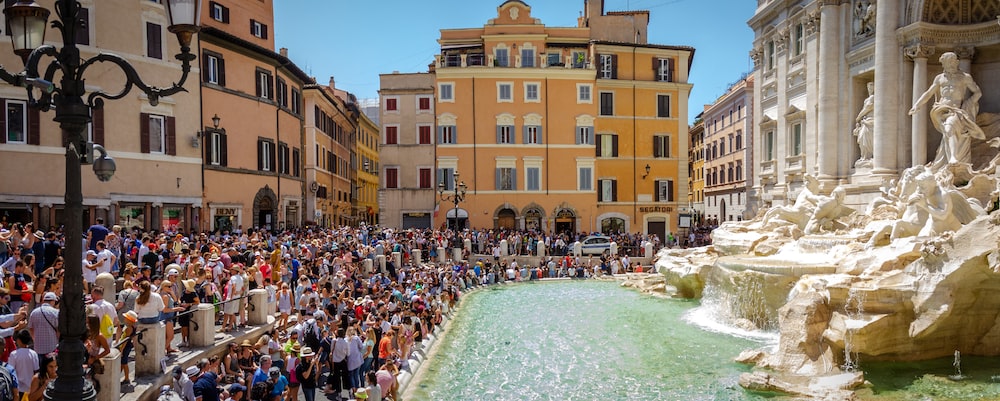
crowds at Trevi fountain

This one never ceases to amaze me. The Trevi Fountain is always packed with thousands of tourists, and Rome’s most enterprising pickpockets. Visiting the beautiful baroque fountain can be a nightmare, especially if you don’t enjoy being squashed like a sardine amongst multiple bus loads of tourists.

virus caprarius rome

However very few people seem to know that less than 100 yards away you can visit an incredible site, 9 meters below ground. The Vicus Caprarius is an archaeological site that stretches 350 square meters under modern Rome. La Città dell’Acqua (City of Water) introduces you to the Virgin Aqueduct, which still feeds the water to the Trevi fountain. You can also see parts of a 1st century Roman apartment building that was converted into a private home in the 4th century, as well as a mini museum of artifacts discovered during the excavation.

Speaking of which, this was only discovered in 1999 when the Archaeological Authority of Rome was doing surveys for the renovation of the Cinema Trevi building. So in a way it’s a very new, very old site!

Although tickets do sell out, there are very few people allowed in at any given time, so you have tons of space to breathe in. They also have very clean, modern bathrooms.

Getting there: approximately 30 seconds from the Trevi Fountain.

E-Bike Tour of the Appian Way

This is a fantastic way to escape the crowds and see some amazing sites. I recommend doing a small group bike tour like this one offered by Liv Tours.

Liv Tours E-Bike Tour

The tour meets at Circus Maximus where you get your bike and helmet, then takes off up the Appian Way – one of the oldest existing roads in the world. Built between 312 B.C and 264 B.C, the Appian Way stretches all the way to the coast of Brindisi in Puglia.

As you ride this ancient road you will stop to visit a variety of fantastic churches and mausoleums and ancient Roman ruins. E-Bikes are the perfect way to explore the Via Antica Appia and are much easier and more comfortable than traditional bikes, making the 4 miles stretch covered in this tour very enjoyable.

Getting there: you meet the Liv Tours team at the top of the Circus Maximus near the Baths of Caracalla. More information here.

RELATED POST: How To Get Into Rome From The Airport

Palazzo Altemps

In my book Glam Italia! 101 Fabulous Things To Do In Rome I tell you Palazzo Attempts is the best museum you’ve never heard of. And it is.

This sensationally beautiful palazzo was built in the 14th century by the nephew of Pope Sixtus IV, the bought in 1568 by Cardinal Marco Sittico Altemps, nephew of Pope Pius IV. The cardinal made the palace his home, filling it with his incredible collection of antiquities and his library of extremely rare books.

Palazzo Altemps

Since 2006 Palazzo Altemps has been open to the public, to show case masterpieces of ancient sculpture owned by the Italian government. The collection of marble sculptures takes place over two floors of the palazzo as you work your way through a labyrinth of stairways and decorated rooms. Did I mention it is sensational?

My favorite piece in the collection is the Ludovisi Gaul, a complex and achingly beautiful statue that is an ancient Roman copy of any even more Ancient Greek statue.

Ludovisi gaul Palazzo Altemps

Palazzo Altemps is now part of the Museo Nazionale Romano and can be bought as its own ticket, or as part of a multi-museum ticket. The other three museums are Crypta Bali, Palazzo Massimo, and the Baths of Diocletian, each of which are in the book and should be on your must see list. All of these are spectacular, all are in walking distance from major attractions and all of these get very few visitors, even when Rome is packed with tourists.

Getting there: 1 minute walk from the top end of Piazza Navona.

The Galleria Colonna

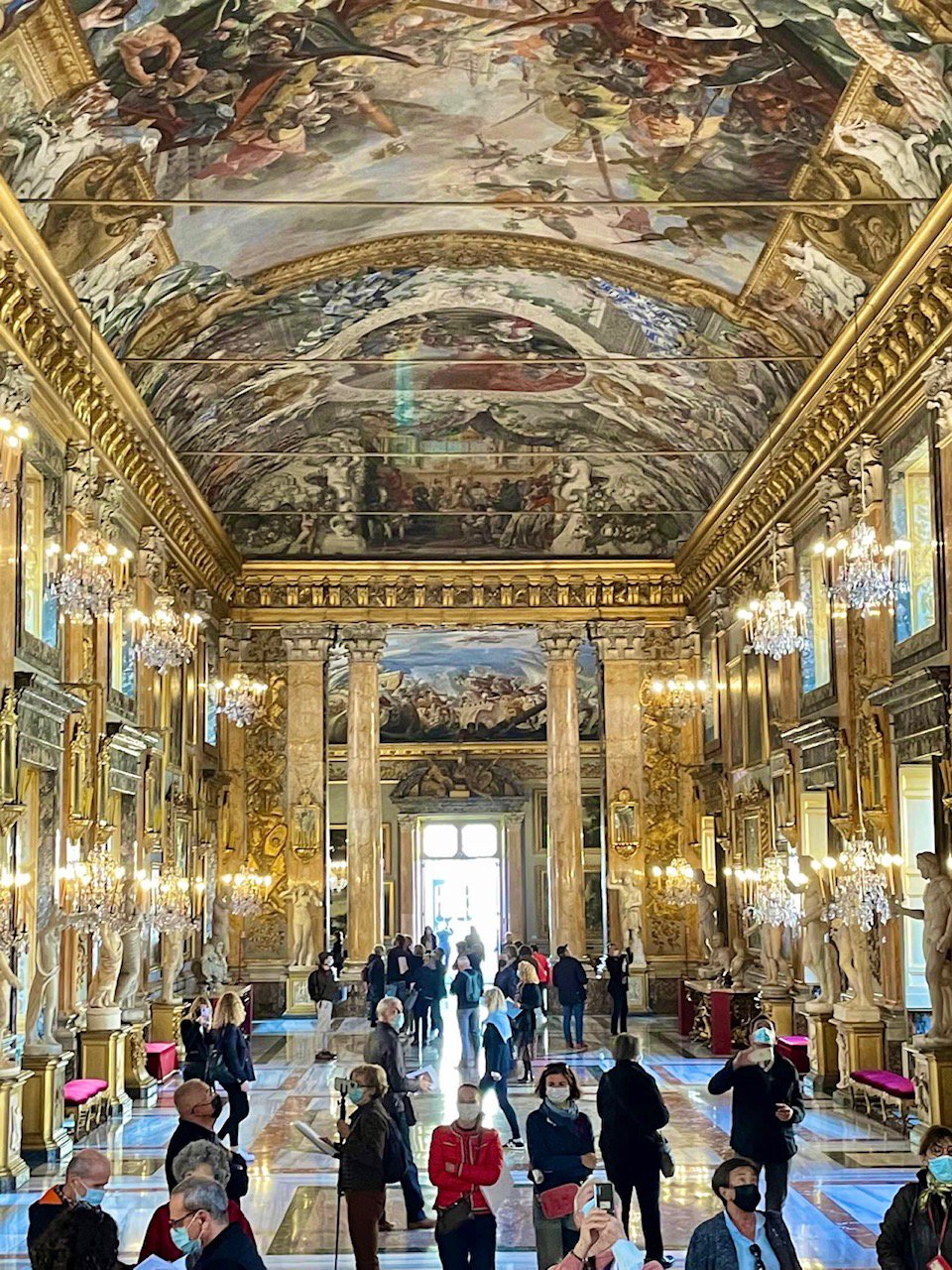
Palazzo Colonna Rome

One of the best kept secrets in Rome, this stunning private palace was originally built as a fortress for the wealthy Colonna family. Over time it became a private residence with a staggering private art collection including pieces by Tintoretto, Guercino, and Carraci.

The enormous Great Hall with its mirrors, statues, priceless art and magnificent chandeliers has a Versailles level of opulence. Princess Isabella still lives at the palace and you are able to visit some of her private rooms as well as her secret garden.

private apartments palazzo colonna

Galleria Colonna is open to the public on Saturdays. Be sure to book tickets online ahead of time.

Getting there: 5 minutes walk from Piazza Venezia and the Wedding Cake building (Il Vittoriano)

More Cool Things To Do In Rome

Best travel guide for Rome and the Vatican

If you are planning a trip to Rome, or will be spending time in Rome on your Italy trip, be sure to read my international best selling book Glam Italia! 101 Fabulous Things To do In Rome. This travel guide not only tells you about places to visit, but also gives you background on why, who built it and why they built it. You also learn about must try Roman foods, the best markets, amazing underground sites to visit and even the best places to go for a sunset aperitivo!

Glam Italia! 101 Fabulous Things To Do In Rome is available worldwide on Amazon.

Want more fabulous content on cool and fascinating things to do in Italy, including secret towns and villages you’ve never heard of? Join the thousands of members worldwide who belong to my monthly newsletter. You can join the newsletter here.

Unusual In Rome ~ Why You Need To See The Talking Statues

Rome is full of secrets. Secrets hiding in plain sight, right under your nose. This one is a secret that everyone who lives in Rome knows, but I never meet  non-Romans who do. Now of course I cannot possibly be the only one, but I can pretty much guarantee that you won’t run into anyone who knows this story.

Pasquino, The Talking Statue

In 1501 while renovations were being done on Rome’s Palazzo Braschi, an Hellenic statue from the 3rd century B.C was discovered. He was very damaged but also very noteworthy as he was one of the original statues from Domitians’ Stadium. Domitian’s Stadium was built in 85 A.D, centuries later Piazza Navona was built over its ruins. (You can read more about it in this blog post or in detail in my book Glam Italia! 101 Fabulous Things To Do In Rome.) The statue known as Pasquino was kept in place and the tiny piazza where he stands, adjacent to Piazza Navona, was renamed Piazza Pasquino.

Pasquino, the Talking Statue Of Rome
Pasquino, The Talking Statue of Rome

There are several stories about who the statue is. When I have researched him I’ve read that he is a Greek hero, possibly Menelaus, Ajax or Achilles. When the story of the statue was first told to me it was a story of Achilles, so despite the statue resembling a series of Menelaus carrying the body of Patroclus, that was then argued to be Ajax carrying Achilles, I stick with the first story I was told:

The Story Behind The Statue Of Pasquino

If you really look into the face of the statue there is something quite haunting about it. In fact with this story you can sense the anguish in every aspect of the body.

Pasquino's face, Rome
Pasquino/Achilles looking away from the body of Patroclus

Achilles and Patroclus were both lovers and comrades fighting against the Trojans. On this day Achilles who feels slighted by Agamemnon decides not to fight, and Patroclus convinces him to let him go in his place, leading the Mirmidon army wearing Achilles armor.

Patrolcus wins the battle but is killed by Hector. The statue tells the moment when the distraught and agonized Achilles has run out to the battlefield and scooped up the body of his beloved.

There are lots of missing body parts, such as Achilles right arm, but if you follow through you can see his splayed right hand holding onto the torso of Patroclus, whose dead body arches back from us. Were the statue intact we would see Achilles’ left arm supporting the upper body as the deadweight of Patroclus falls away. It was explained to me that Achilles is turning his head away, howling in anguish. So, of course that’s what I see when I look at him.

Pasquino the talking Statue of Rome
See the remains of Achille’s hand on Patroclus’ torso?

There is a statue very similar to this in Florence’s Loggia di Lanzi, of Menelaus supporting the body of Patroclus. If you look at it, or at pictures of it, you can follow the bodies in this statue. The Florence Menelaus is thought to be one of 15 statues is the Pasquino Group.

Menelaus with Patroclus in the Loggia di Lanzi, Florence.

In this statue King Menelaus’ helmet is wrong, the angles on the bodies aren’t quite the same as Pasquino’s, but you get the idea, and Patroclus’ replacement left arm is all out of whack.

RELATED POST: UNUSUAL THINGS TO DO IN ROME – THE PYRAMID OF CESTIUS

How Pasquino Got His Name

The origins of the statue being named Pasquino are also varied. He could be named for a character in one of Boccaccio’s short stories, I’ve heard he was named for a school principal back in the 1500s who looked like him, and I’ve been told he was named for a local artisan who wrote funny verses. Regardless, our Achilles is known as Pasquino and the piazza is named after him.

In the 16th century and no doubt long before that Romans would show their displeasure and outrage at the corruption of the church and its officials by leaving notes hanging on the statues in the night. These became known as Rome’s Talking Statues. Pasquino wasn’t the first, but he became the most celebrated. Signs with scathing yet satirical verses would be hung around his neck in the night so the working people could see them on their way to work in the morning before the guards could take them down. The notes became known as Pasquinate.

Pasquinate became a way of winning elections too. One side would pay the authors to write about their enemies on the other side. The practice actually spread out all over Italy.

Prominent figures began to despise Pasquino. The popes were the main targets and they thought up ways to get rid of him. One of my favorite themes is Popes Behaving Badly, which coincides beautifully with one of Pasquino’s most prevalent themes, criticism of the Popes’  “prostitution luxury”. Pope Hadrian VI wanted Pasquino thrown in the Tiber River, Popes Sixtus V and Clement VIII also tried to get rid of him, and Benedict XIII even had a night watchman stand guard with punishments for those caught including branding, incarceration and death.

The more they tried to silence Pasquino, the more Pasquinate appeared on other statues throughout Rome.

RELATED POST: WHY YOU NEED TO VISIT THE BATHS OF DIOCLETIAN IN ROME

Pasquino’s Signs

Today Achilles/Pasquino still gets signs hung around his neck. Locals are allowed to fix signs to his pedestal but not to his or Patroclus’ bodies.

Pasquino the talking statue of Rome
Pasquino’s sign one morning in September 2019

This sign is written in Romanesco, which is a local dialect. It rhymes both in Romanesco and in Italian, but not in English. Translated it says:

It is no longer the moment to obey. Defend your destiny with verve (fight for your destiny) Even if it’s at the expense of dying, don’t let yourself be treated like a puppet.

Every day he has a different sign. It is placed there in the night or the very early morning and tends to be gone by afternoon.

Piazza Pasquino is next to Piazza Navona on the other side of the Museo di Roma.

If you are part of my Private Members Newsletter check your inbox for my favorite restaurant here by Pasquino. It is a cult favorite and is just fantastic! Also my private members will be getting stories about Rome’s other 5 “Talking Statues”. They are quite fabulous. You can join the Private Members Newletter here

Verified by ExactMetrics