Did you know that the largest royal palace in the world sits just 37 kilometres outside Naples?
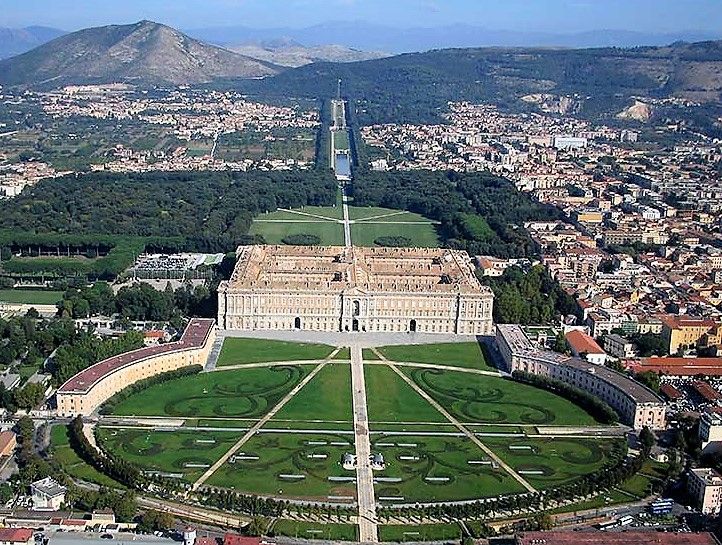
The magnificent Caserta Palace
In January 1752 Charles VII of Bourbon, King of Naples and Sicily, began construction on the largest palace in all of Europe, a palace to rival the beauty of Paris’ magnificent Versailles, and the Schonbrun palace in Vienna. Charles VII never ended up living at Caserta, instead he abdicated the throne in 1759 and became the king of Spain. His third son, Ferdinand IV became king of Naples and Sicily, and lived at Caserta. In 1768 Ferdinand married Maria Carolina of Austria, who had grown up in the Schonbrun Palace, and who’s sister MarieAntoinette would marry Louis XVI of France two years later and move to Versailles, the very palace that Caserta was designed to beat. Makes your head spin, non?
The Palace of Caserta is massive. It has more than 1200 rooms, stands 42 meters (45 yards) high and 250 meters (273 yards) long, taking up 44,000 square meters. In 1997 it became a UNESCO World Heritage site
The fountains at the top of the palace gardens at Caserta
The gardens are 3.5 kilometers long, with a central waterway and 6 fountains, surrounded by a tree filled park.
Statues enjoy a break from the sun, tucked away in the shade of the trees. Others line the walkways and the bridges.
You can rent bikes to ride around the gardens, take a horse and carriage or just walk.
Horse and carriage, bicycle or just walk. The gardens are lovely.
The palace and the grounds are nothing short of spectacular. No matter how prepared you think you are, once you walk onto the palace grounds the sheer size of Caserta is staggering. In it’s day it must have been magnificent.
There are lots of tree shaded areas to wander through or sit with a good book
Oddly, hardly anyone bothers to come to Caserta. You would think the largest royal palace in all of Europe would get great tourist traffic, but Caserta gets around 500, 000 visitors per year compared to Versailles 5 million.
Unfortunately Caserta is sorely lacking in funds and as such is a little run down. The palace has been used as a training facility for the Italian Air Force, which along with the Carabinieri still has offices there. Movies including Star Wars, Mission Impossible and Angels and Demons have shot here. Palace security is apparently lacking, and despite the Air Force and the Carabinieri both being in residence there have been problems with theft, most notably recently $100, 000 worth of copper being stolen from a lightening conductor on the roof.
The grand staircases leading to the royal apartments
Because hardly anyone bothers to go visit Caserta it also feels like your best kept secret. Other than my friends who live in the area I don’t even know one person who has been there before.
If you are in the Amalfi Coast/Naples area Caserta is well worth a visit. The train station is right outside the palace, so you don’t need to rent a car.
Do you belong to my Private Members Newsletter list? Join the list and receive the twice monthly newsletter full of secret places in Italy the tour buses don’t go to! Sign up here.
I could easily run away to Rome and never look back. I have insanely long lists of things to do in Rome that I will need more than one lifetime to ever complete, so when I’m there it’s hard to get me to take off on a day trip unless I am leading one of my tours.
But people are always asking me about good day trips to do from Rome, and preferably day trips that you can do by train. If you have read my book Glam Italia! How to travel Italy: Secrets To Glamorous Travel (On A Not So Glamorous Budget) then you already know that I am a huge advocate of staying in as few places as possible, and doing lots of day trips instead of constantly packing up and moving. So much vacation time is wasted by packing, checking out, waiting to check in to the new place and then checking in. I would rather just stay in one or two locations. (If you haven’t read my book you can get your copy here.)
Most places in Italy are easily reached by train, which makes getting around incredibly easy. The high speed trains open up so many opportunities to you too. On my tours we often do day trips to Venice from Rome. It takes 3.5 hours each way by fast train, but the time whizzes by as you watch Italy through the huge, panoramic windows. It’s like being inside an episode of a National Geographic TV show!
The trains are very economical too, so you can travel around on any budget and not miss out.
The following is a list of 10 fantastic day trips from Rome by train. If you are new to train travel, or if this will be your first time in Italy, I have a hugely popular post that breaks down everything you need to know about using the trains in Italy. You can let that be your guide and take away any fears you may have about train travel and how to use the trains in a foreign country.
Florence is a super easy day trip from Rome. The high speed AV trains run all day long and it only takes about an hour and 20 minutes to get there.
I recommend getting on the earliest train you can so that you can arrive in Florence before the crowds from the bus tours and the cruise ships descend on the city. If you can handle getting up early, I recommend trying to arrive in Florence around 8 am. You will have the city to yourself and be able to take fantastic photos in popular places like the Piazza della Signoria, Palazzo Vecchio ad Ponte Vecchio without a million tourists in the way.
It is amazing to see those places empty, and be able to see all the statues, the old store fronts and the famous views. Have a 10 am cup of coffee and just watch the crowds arrive – you won’t even believe it! And you will be thanking me for making you get up so early….
Pompeii is just fantastic, and if there is any way that you can add it into your itinerary, I highly recommend it.
Pompeii is a suburb of Naples and has a train stop right outside the main gates. Take the high speed/AV train from Rome to Naples and then the little local Circumsuviana train to the Pompeii Scavi stop.
When you are done with Pompeii jump back on the train and go 3 stops to Ercolano. You have to walk a few blocks from the train but everything is well signed so you won’t get lost.
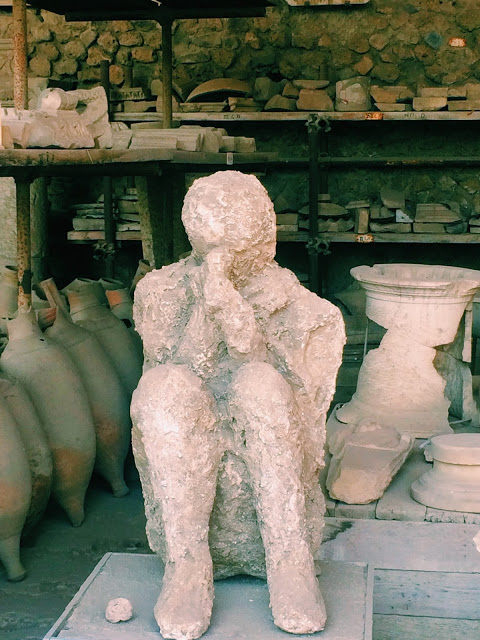
If doing both, I suggest going to Pompeii first. Learn all about what happened when Vesuvius erupted, learn about Roman roads and the clever way they built their towns – there is so much to see! After visiting Pompeii head to Herculaneum and see just how vertical the homes were, you won’t believe the intense colors of the 2000 year old frescoes, and you will get more of a feel for the community they lived in.
It is amazing how differently the two towns were impacted by the eruption. If not for a change in the wind we wouldn’t have Herculaneum. It would have disappeared over the millennia just as other towns have done.
If traveling between May and October take a big bottle of water with you and refill it as you need with cold Aqueduct water from the fountains in Pompeii. It gets very, very hot there so make sure you have a sunhat and comfortable walking shoes too.
To get to Capri you just take the fast train to Naples and then a 15 euro taxi to the harbor. The taxi will take you to the ticket booths for the hydrofoils and ferries to Capri, Ischia and Procida.
I go to Capri with all my Glam Italia Tours, and it is fabulous. There is lots to see and do and it makes a great day trip from Rome.
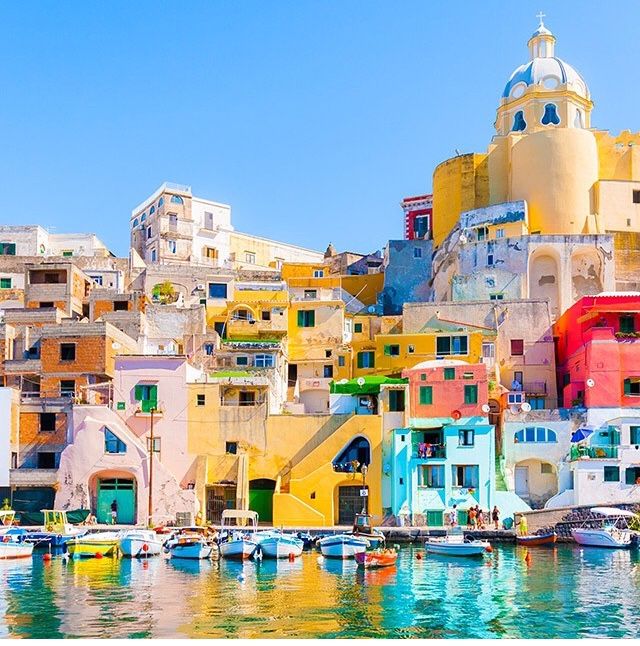
Another island that I love going to but don’t get to often enough is the tiny island of Procida, which is also off the coast of Naples.
Procida Island off the coast of Naples
One of the 10 most colorful places on earth Procida gets a fraction of the tourist traffic that nearby Capri does. It is also much, much less expensive. Read more about Procida here:
Make sure you allow yourself time to eat some piazza in Naples before you take the train back to Rome.
4.TIVOLI – HADRIAN’S VILLA AND VILLA D’ESTE
This one is actually easier as a bus trip from Rome. I did it with Viator, and although it was good the tour guide drove me mental. He was desperate for us to buy leather at his friend’s shop and eat at his other friend’s restaurant which got incredibly annoying. But other than that he was a really good guide and great information.
Hadrian’s Villa/Villa Adriana outside Tivoli. This was part of Emperor Hadrian’s love nest.
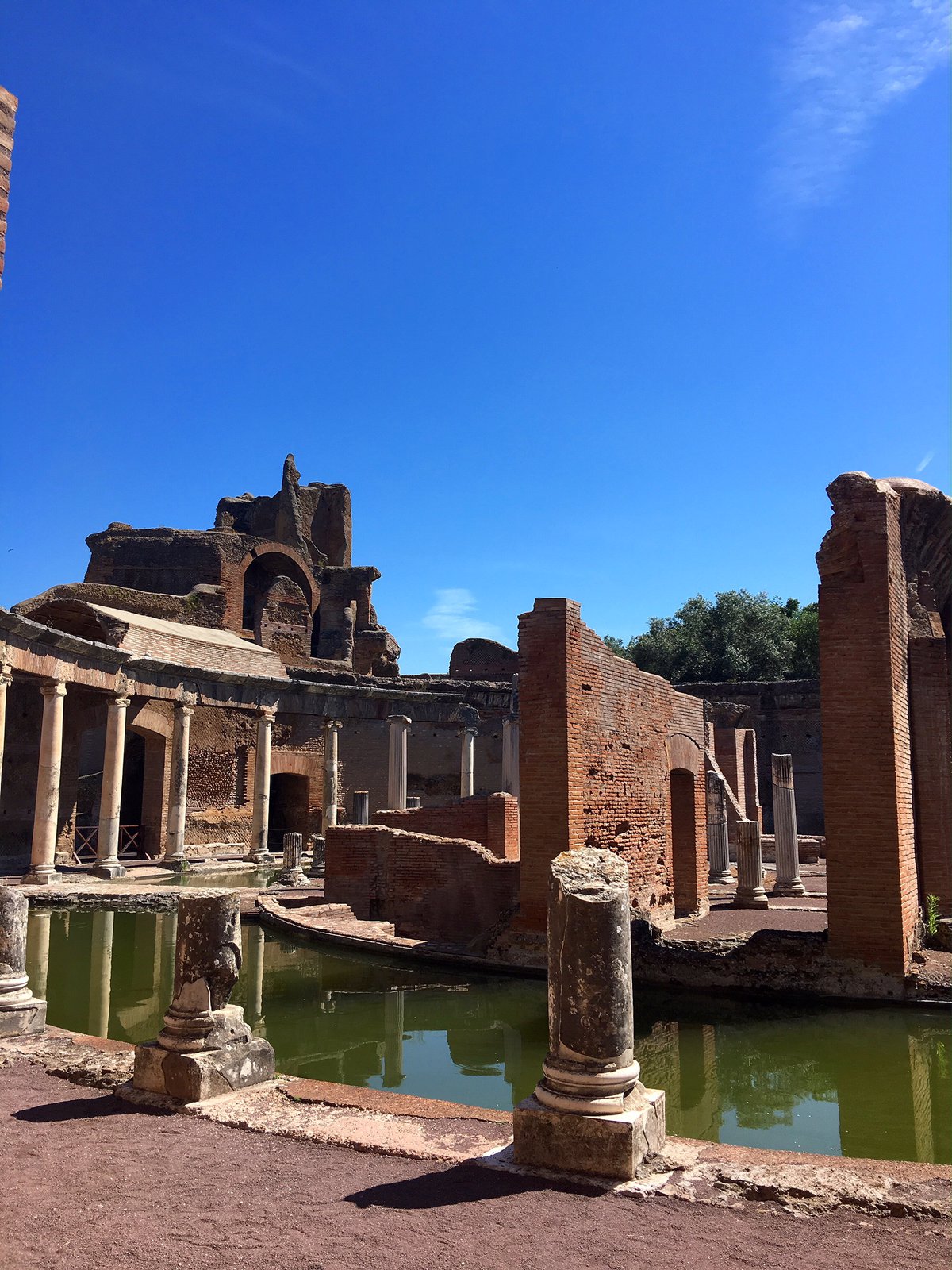
The day trip took us to Hadrian’s Villa, (Villa Adriana) a UNESCO World Heritage Site near Tivoli. When Hadrian was emperor he didn’t much care for living on the Palatine Hill, so built this giant complex in the second and third decades of the 2nd century. He was thought to have been living there as his main residence from around 128 A.D.
The Canopus pool at Hadrian’s Villa out side Tivoli
Villa Adriana is definitely worth visiting. The complex is enormous and absolutely spectacular.
Just up the hill from Villa Adriana in the town of Tivoli, Villa d’Este is a 16th century villa built by Cardinal Ippolito d’Este. Much of the material used to build d’Este was pilfered from Villa Adriana.
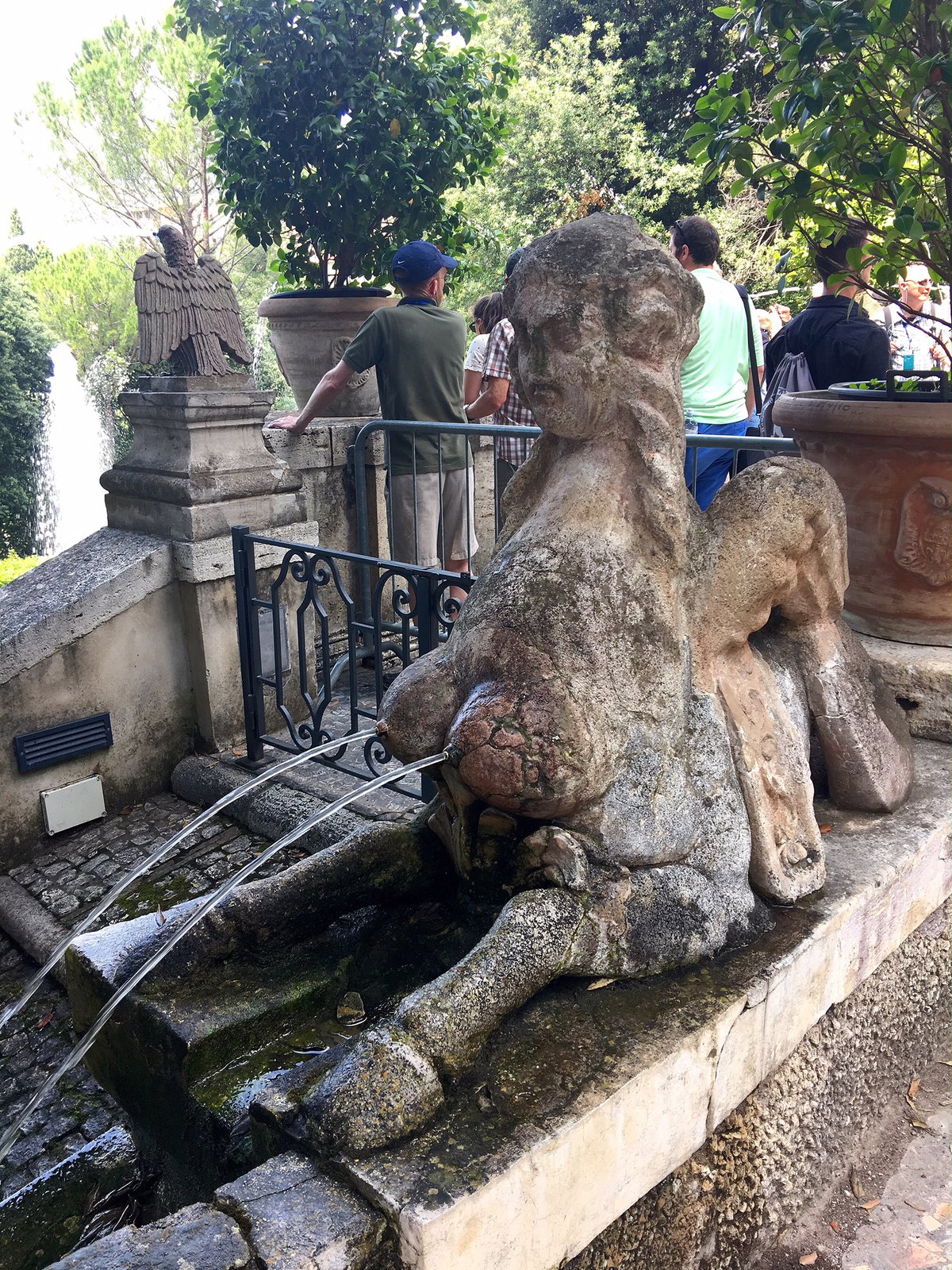
Cardinal Ippolito d’Este commissioned this fountain and its twin for the pleasure of his 4 sons…. Because let’s face it – what is the point of being the richest cardinal if you don’t have a family and some boobie fountains???
In a time when there were no paparazzi to see what was going on, Popes and cardinals and who knows who else were all busy marrying and having mistresses and orgies and generally getting up to no good. Cardinal Ippolito d’Este was very wealthy, with a wife and 4 sons. He took an enormous amount of land from the locals to build his gardens at Tivoli, and at one point had 12 lawsuits against him. He didn’t care and built them anyway.
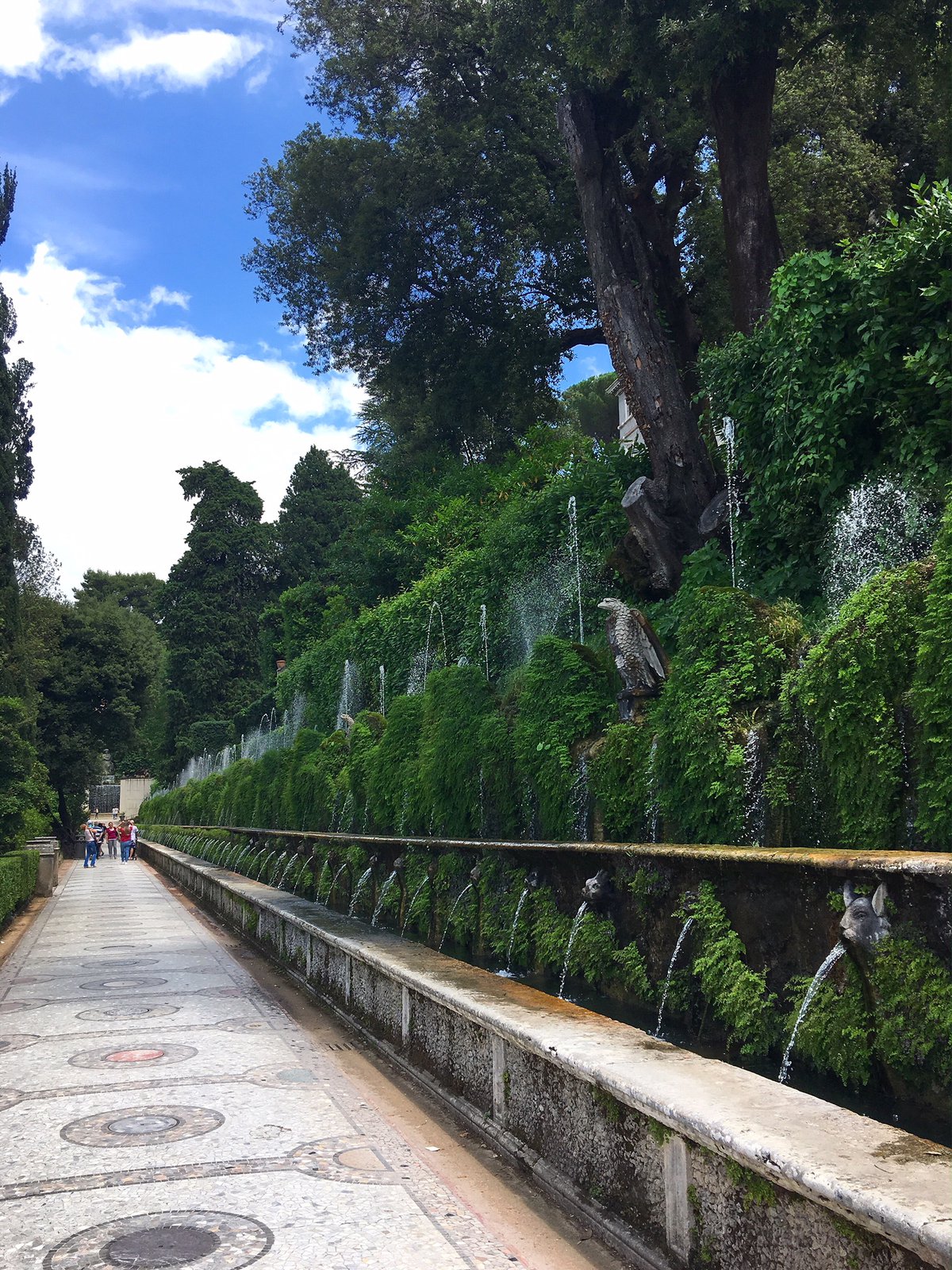
The most famous element of the gardens are the fountains. D’Este diverted the Aniene river to provide water to one of the most spectacular series of fountains and water exhibits you will ever see.
Walkways of fountains at Villa d’ Este in Tivoli
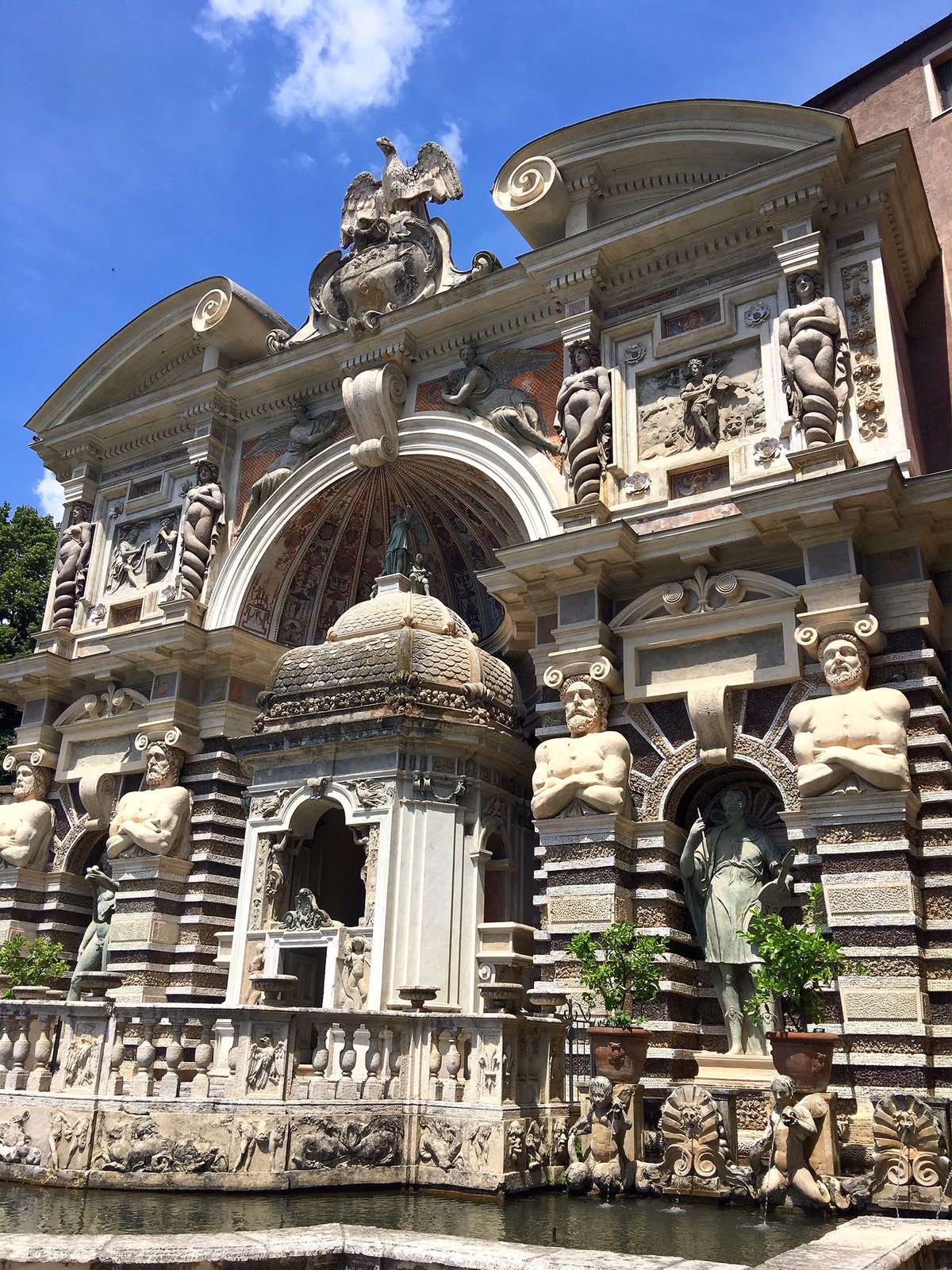
Everything is powered by the water itself, including a huge fountain that plays renaissance music several times per day. Make sure you find out when the fountain is scheduled to play and time your visit to be in front of it when it does – it is quite remarkable! We were there at 2:30, but I don’t know what other times it goes off.
The musical fountain at Villa d’Este in Tivoli
You can get to Tivoli by train but would have to get buses to and from Villa Adriana and Villa d’Este and every which way I looked at it, it seemed better to take the Viator bus trip from Rome. Just don’t eat where the guide tells you to as there are much better and less rip-off places all over Tivoli. And Tivoli is not the place to be buying leather jackets!
5.Orvieto
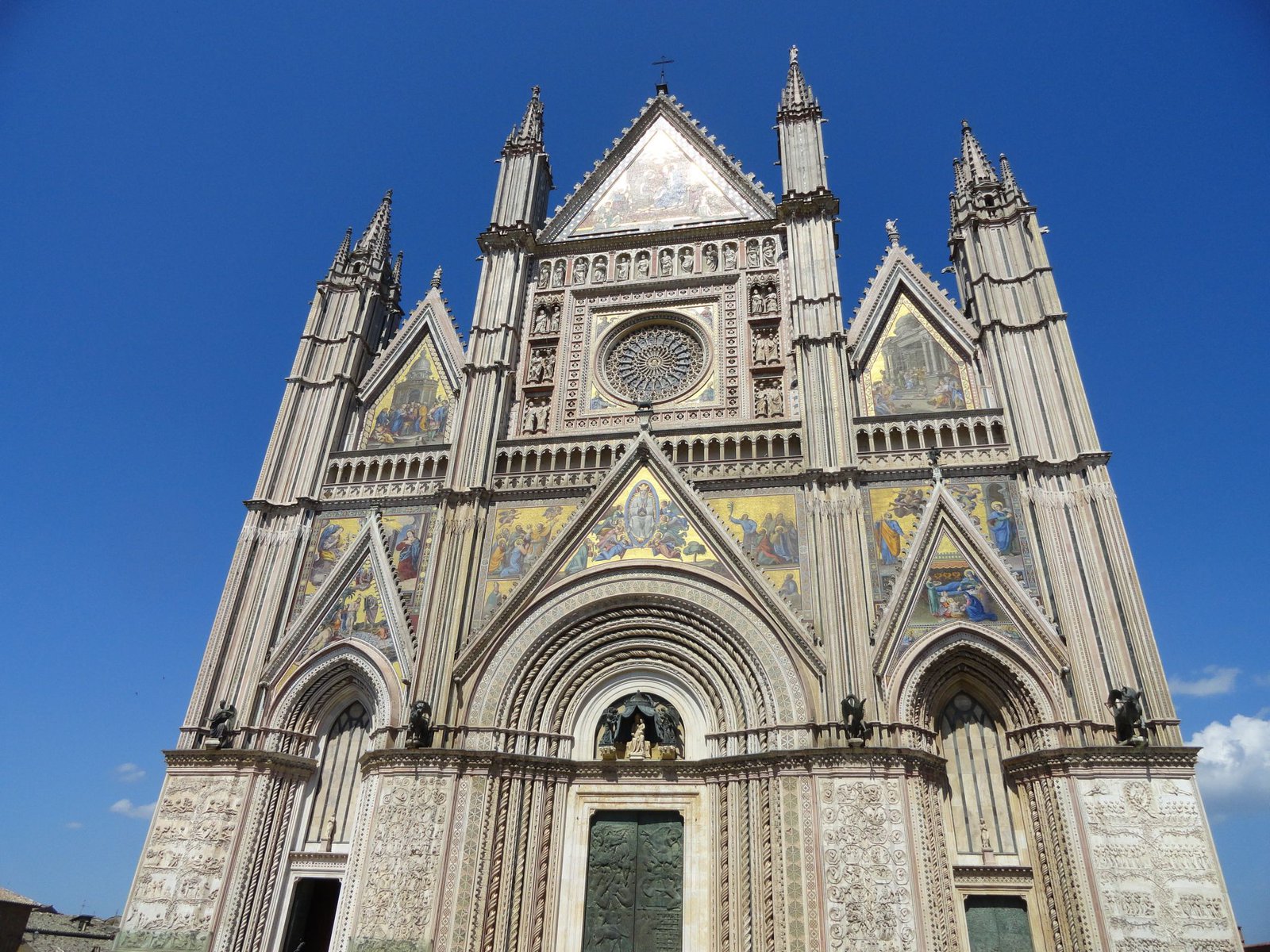
Orvieto Cathedral
Just an hour from Rome by train the Umbrian border town of Orvieto is an absolute gem. From the train station you take a funicular up the hill to the medieval town. Orvieto is famous for its cathedral, which is thought to be one of Italy’s most beautiful. The outside may remind you of Siena, and the Luca Signorelli frescoes inside are said to have inspired Michelangelo’s work in the Sistine Chapel. This is a fabulous town to wander around, divert down little side streets, eat the wonderful local cuisine, and of course drink Orvieto wine! I just love Orvieto.
But there’s more! You can descend below ground to one of the most unique undergrounds in all of Italy. This is Etruscan country, and the labyrinth of tunnels and rooms below the city of Orvieto were dug by the Etruscans more than 2500 years ago.
Marlena di Blasi’s book The Lady in the Palazzo: An Umbrian Love Story is set in Orvieto. She and her husband Fernando live there now after 1000 days in Venice, and another 3 years in Tuscany. I just love her books and recommend reading this one before going to Orvieto. I love recognizing the various streets and shops and eateries she talks about, it adds even more flavor to the experience! I always am on the lookout for her but have never seen her when I have been in town. Not that I even know what I would do if I did see her – is it madly geeky to fan-girl on up to an author and tell them you love their books?
6. Viterbo
Viterbo is a magical medieval town an hour from Rome by train. For 20 years during the 13th century it was the home of the Pope. Considered one of the best preserved medieval towns in all of Italy, Viterbo is a fantastic place to just wander and take in all the history.
With a population of around 60,000 there are some wonderful places to eat and some good shopping. The Pope’s Palace and the Papal Hot Springs are probably the biggest tourist sites, but in my opinion this is a town to visit with no agenda and a good appetite.
7. Civita di Bagnoreggio
This one takes a little longer to reach but is well worth seeing!
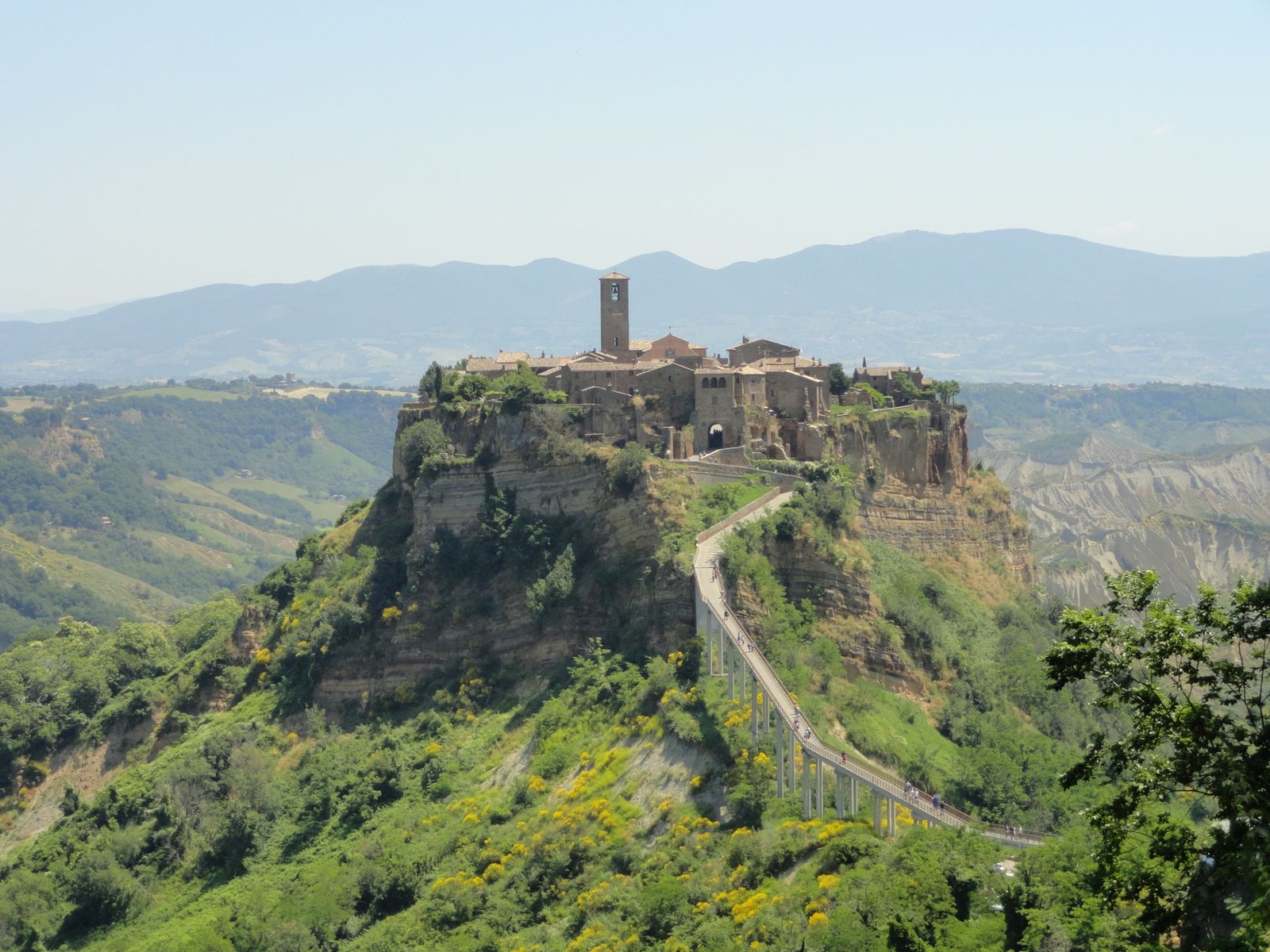
Civita di Bagnoreggio, also known as La Citta Che Muore/The Dying Town was founded on a hilltop by the Etruscans 2500+ years ago. Over the millenia the town has slowly been eroding away and falling down the hillside. In 2006 it was placed on the World Monuments Fund’s watch list of the 100 most endangered sites due to the danger it faces from both erosion and also unregulated tourism.
Architecturally it is quite fantastic. Being so remote and isolated much of the architecture spanning back hundreds of years is unaltered. It was the birthplace of Saint Bonaventure, who died back in 1274. Since then his childhood home fell off the cliff as the town eroded.
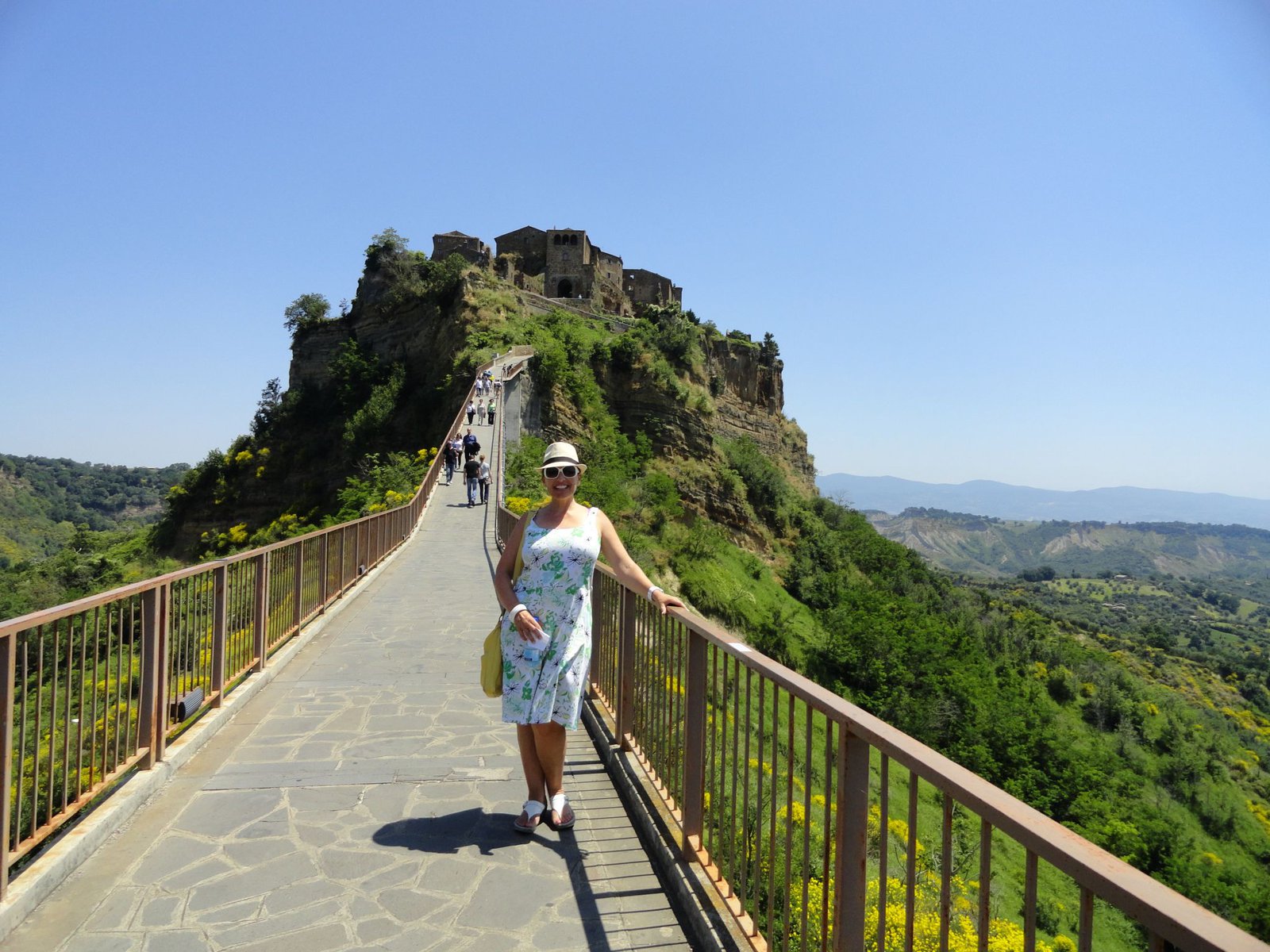
On the bridge to Civita di Bagnoregio
There are no cars in Civita, and in fact the only way into the town is via a walking bridge that bridges a giant chasm and looks like the great wall of China. Civita is like an island in the sky with 365 degree views.
The year round population is only 7 people, and in the summer it swells to 100. Tourists have bought up some of the homes and modernized them a little, but Civita feels like it is a place that time forgot.
It is just fantastic.
Without a car the best way to get to Civita from Rome is to take the train to Orvieto and then from the Orvieto train station take the bus to Civita. If you were to do both in one day I would get an early start, do Civita first, and then swan around Orvieto all afternoon and into the evening.
.
8. Tarquinia
Two and a half hours from Rome this is another train and bus combo trip and is perfect for anyone interested in some really ancient history. The burial grounds or nercropolis date back to the Iron Age of the 9th century B.C.
Tarquinii was one of the most important and ancient Etruscan towns, and has a fascinating history.
The necropolis is one of Italy’s most important Etruscan sites. More than 6000 tombs have been excavated here, 140 of which have vivid, incredible frescoes, 20 of which ar eopen to the public.
You also need to visit the Museo Archeologico while there to see some pretty sensational Etruscan artifacts.
9. Ostia Antica
From the steep amphitheater to Neptune’s Baths to the Thermopolium, an ancient café with a bar and traces of the old menu frescoed on the wall, a trip to Ostia Antica is almost like visiting a mini Pompeii. The mosaics are sensational, and by themselves alone are worth the trip, but there is just so much here to see!
Ruins at Ostia Antica
Book ahead to have a guide take you into one of the two Case Decorate (decorated houses) to see the 2000 year old frescoes. The guided tours are on Sundays at 10:30 am, (but check to see if they offer more when you will be in Rome) and you cannot go inside the houses without a guide.
Another point of interest, especially if you a traveling with young boys, is the public toilet at the Terme del Foro. 20 well preserved latrines line a long stone bench where ancient Romans would socialize while going about their business!
Ostia Antica is an easy 25 minute train ride from the Pirimide station. Wear good walking shoes and plan on spending several hours there – there is so much to see!
10.Venice
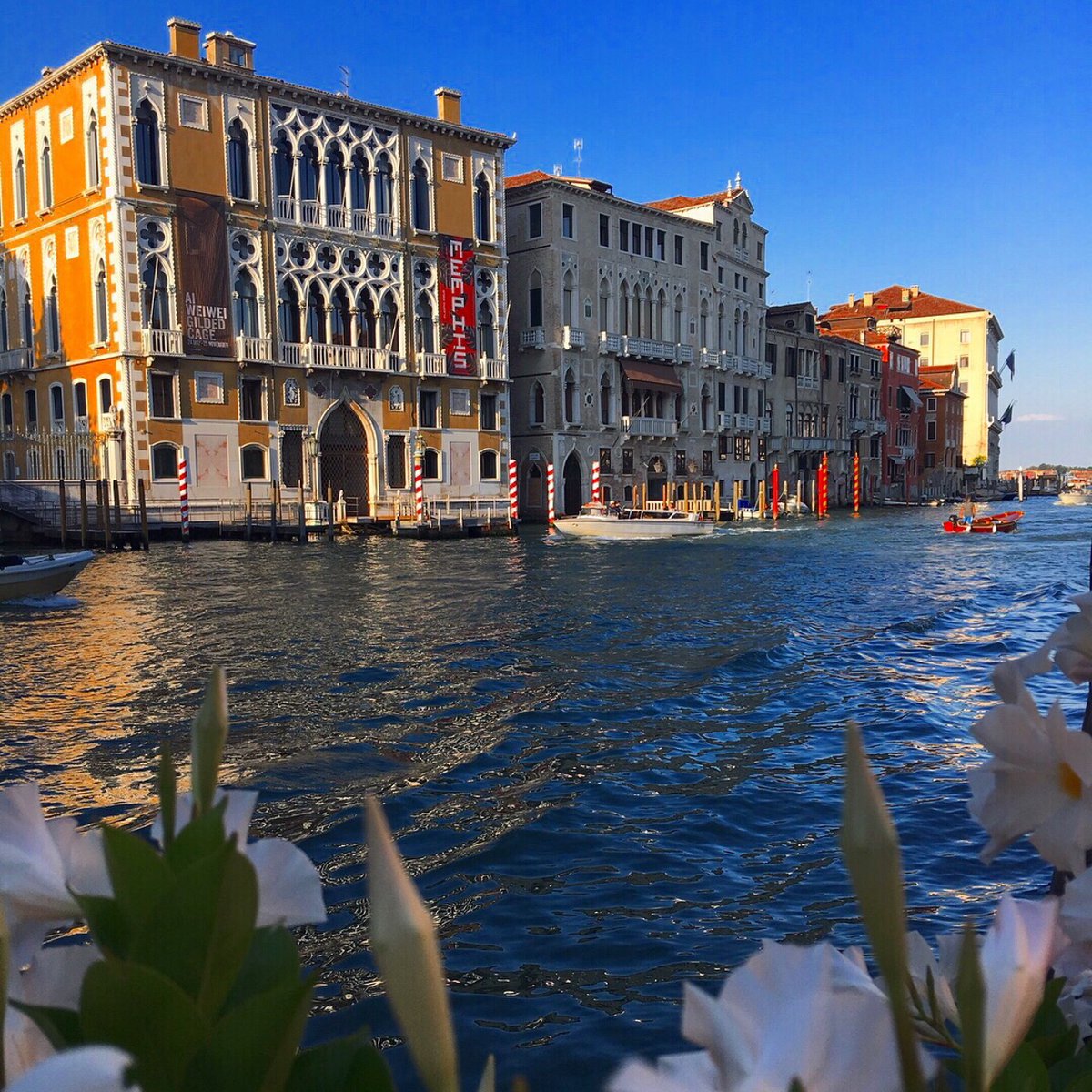
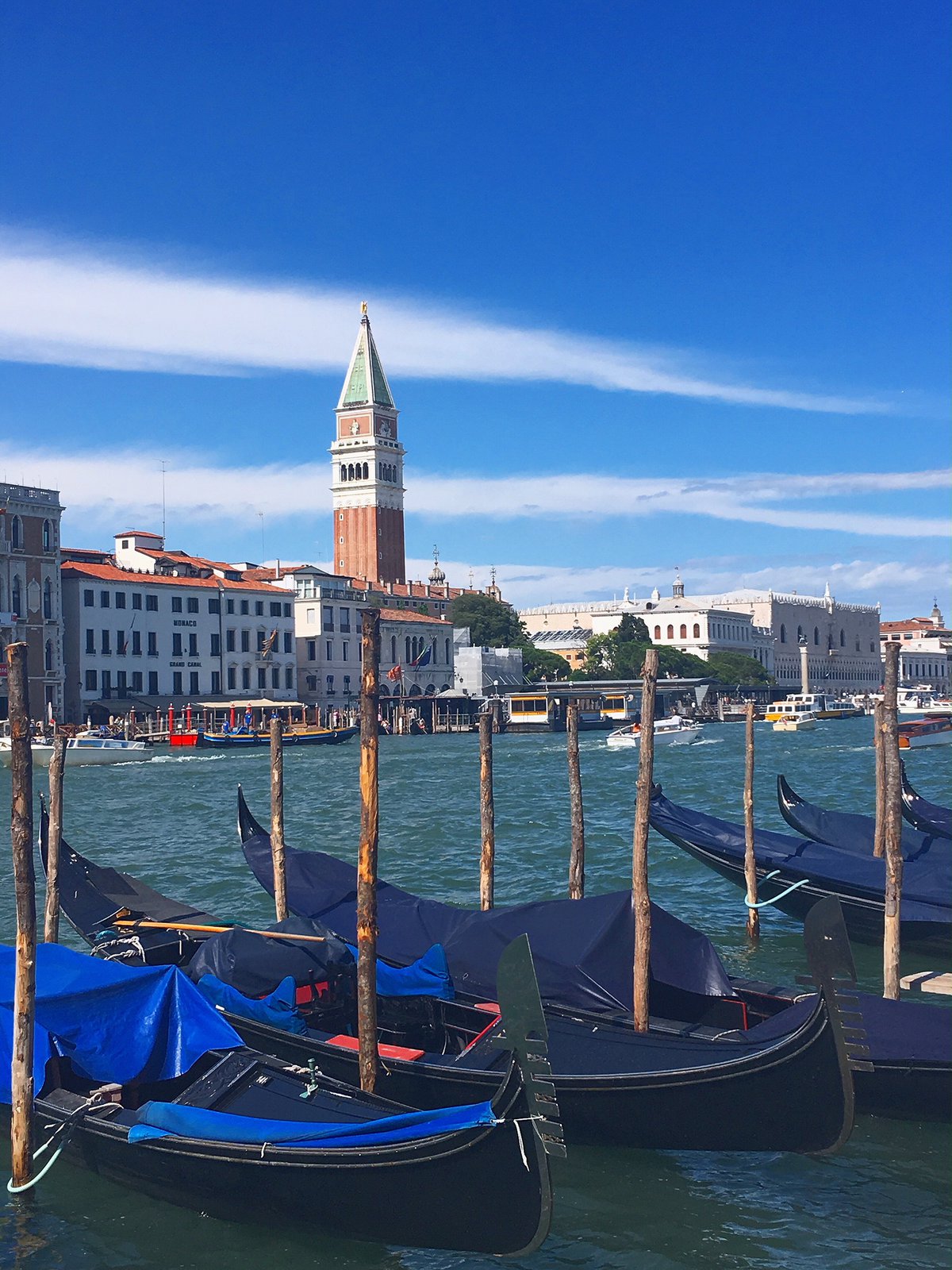
Views from the Grand Canal in Venice
The most unique city on earth is easily accessible from Rome by train, and is well worth the trip. From Roma Termini station it takes around 3 and a half hours. If you can get them buy tickets on the 6:15 Italo train, which will get you into Venice by 10 am. If not, the 8:15 will get you in around noon.
The last trains out of Venice leave between 7pm and 8 pm, so you do need to maximize your time on the ground.
I have made a downloadable PDF with 10 of my secret things to do in Venice, including my two favorite places to eat and some really fabulous places to walk and be far from the cruise ship crowds. This is information that will never be on the blog and is for people who a serious about seeing more than Rialto Bridge to St Marks Square. Get your Secret Venice PDF Here
Do you have any day trips from Rome that you would like to add to the list? If so please tell me in the comments section below.
Naples is gritty and dirty, and parts of it are loud and a bit scary, which I think dissuades some travelers from going there. I was amazed when I finally went there and discovered how magnificent it is! When I finally was able to go to Naples I messaged a Facebook friend who I had never met, and he wound up taking the day off work and showing me around. It was absolutely fantastic! We walked this incredible city for hours, stopped for coffee breaks (Naples has the best coffee in all of Italy) ate Baba and pizza, saw a million amazing things, had no end of fun, and when I got on the train to go back to Salerno that evening I realized that there are still a million more things I need to go back and see.
Pompeii is a suburb of Naples, as is Herculaneum. The Palace of Caserta is nearby too. I had the crazy good luck of arriving at the palace on a Monday afternoon in December, when the crowds had left, leaving me the entire palace to myself. I wrote about it here. While there I learned about Marie Carolina, the absolutely fascinating sister of Marie Antoinette. She lived at Caserta, a palace built to outdo Versailles, and she ran the kingdom of Sicily and Naples. I plan on really studying her and getting well versed in all her accomplishments and then heading back to visit her palace again, this time being more informed.
Naples and its surrounding area have so many sensational palaces and villas to visit and explore. If you are planning a trip to Italy you should consider checking some of them out. To whet your appetite I want to share this fabulous article I found in Italy Magazine about 5 palaces and villas that are part of Naples’ aristocratic past.
Enjoy!
Naples Aristocratic Past: Five Palaces and Villas That Are Sure To Wow
From the 13th century to Italian unification in 1861 Naples was the seat of far-reaching kingdoms, whose territories included the regions of Southern Italy. Neapolitan rulers, depending on the century were Angevin, Catalan, Austrian, Spanish, or French (under Napoleon), their dominions referred to as either the Kingdom of Naples, the Kingdom of Sicily, or the Kingdom of Two Sicilies, according to the realms won and lost in the constant battles for power. A change in rulers often initiated a building spree; not surprisingly, Naples and Campania are home to many aristocratic dwellings, with the Spanish Bourbon kings and court spearheading the construction of some of the most magnificent palaces and villas that have survived to this day.
Here are five not to miss on your next trip to Naples.
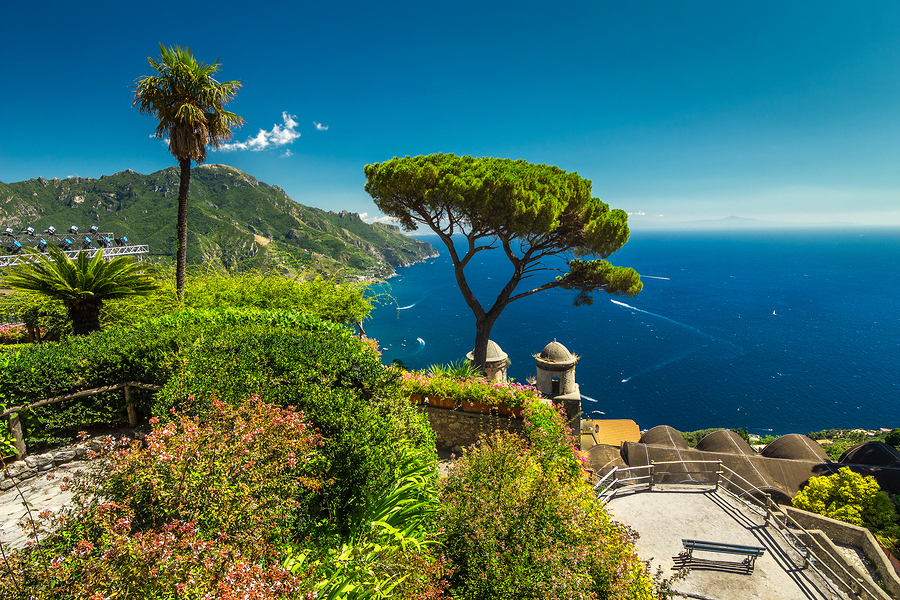
[Villa Rufolo, Ravello]
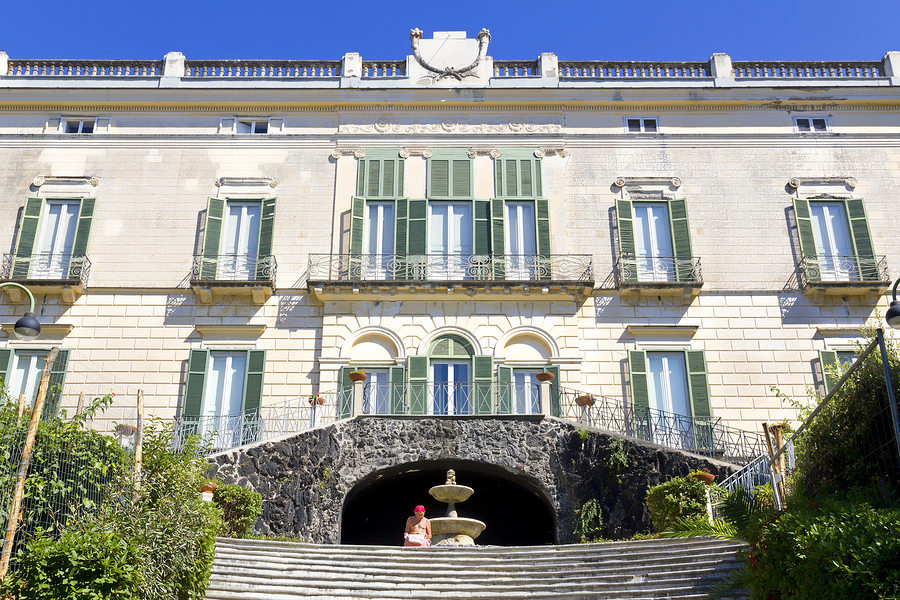
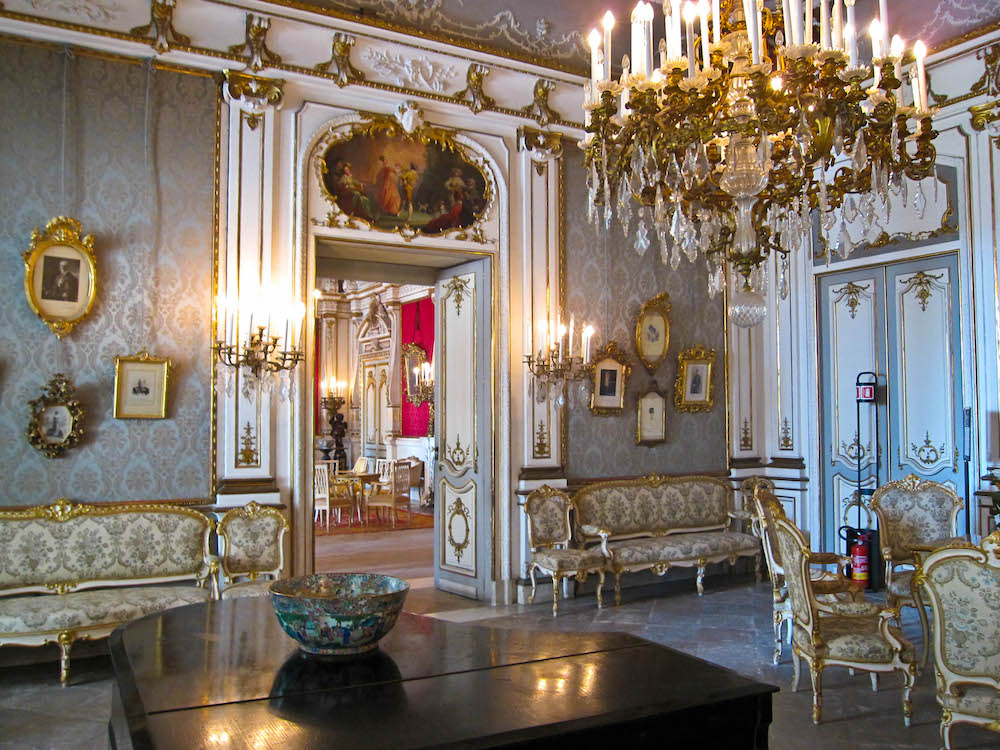
VILLA PIGNATELLI(Museo Diego Aragona Pignatelli Cortes). Since the Middle Ages the Pignatelli family has been one of Southern Italy’s most influential and powerful clans, who at the peak of their power could claim title to14 principalities, 16 dukedoms, 22 marquisates and 18 earldoms. Through strategic marriages the Pignatelli married into the major noble familes of Italy including the Caracciolo, Colonna and Orsini. This beautifully restored neo-classic museum house came into the Pignatelli family in 1867 (after being owned by the Rothschilds and Ferdinand Acton, son of the Neapolitan Prime Minister, Sir John Acton) and for years was a center of Neapolitan social life. You’ll find find many decorative arts collections here reflecting the aristocratic obsessions of the day, including an outsanding array of porcelain from local purveyors like Capodimonte. Del Vecchio, and Giustiniani, and from such major European names as Meissen, Limoges, and Sevres.
Some of the reception rooms (like the White House) are organized by color scheme—red, blue, and green. In these and other rooms you’ll find fine 19th century silver pieces, gilded furniture and ornate clocks.The villa also showcases the San Paolo Banco di Napoli art collection with landscapes, still lifes, and sculpture from major 16th to 20th century Neapolitan artists (including the prodigious Baroque-era painter Francesco Solimena and Gaspare Traversi, a painter associated with the Rococo period, whose work was influenced by Caravaggio). The garden was landscaped English style, no doubt, due to the taste of its original owner. In 1952 Princess Rosina Pignatelli donated the villa and its collections to the state. Riviera di Chiaia, Napoli; cir.campania.beniculturali.it/museopignatelli. Open: 8.30 AM to 5 PM. Closed Tuesdays.
[Photo credit: Wikimedia commons]
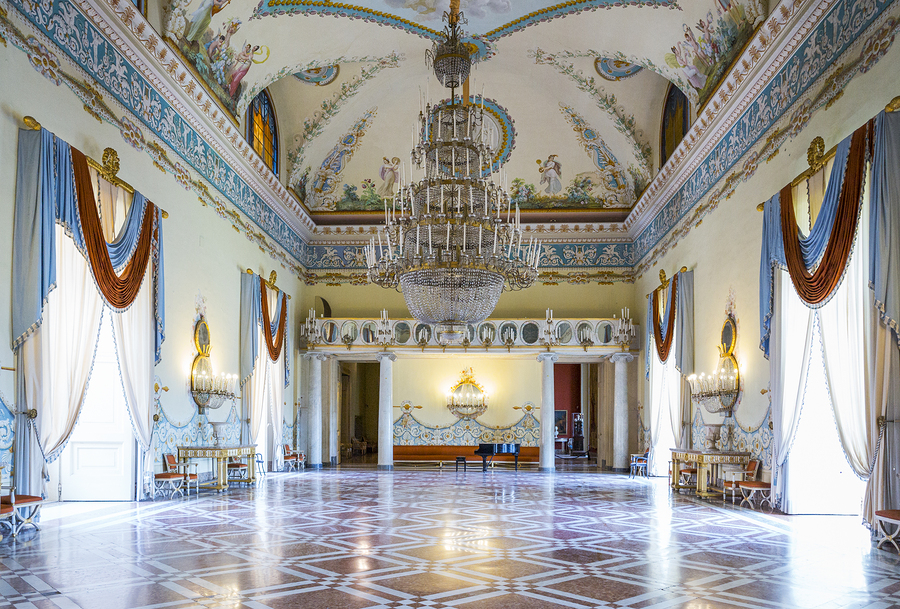
PALAZZO ZEVALLOS STIGLIANO. Built for the Duke of Ostuni, Giovanni Zevallos, in the 1600s by Cosimo Fanzago, the Bernini of Naples, this palace-museum is noted for its outstanding art collection, which includes Caravaggio’s The Martyrdom of Saint Ursula, believed to be his last work, and an extensive collection of Neapolitan paintings from the Cinquecento to the 20th century. The Neapolitan pieces include canvases from the Posillipo School or Art, named after the waterfront section of Naples where artists, among them Anton Pitloo (1790-1837), whose plein air depictions are regarded as forerunners of Impressionism, and Giacinto Gigante (1806-1876) practiced the art of vedute, or landscape painting. There are also works from the Resina School, referencing the seaside town near Naples whose painters were influenced by the Florentine Macchiaioli, sometimes referred to as Italian impressionists. The Palazzo is part of Galerie d’Italia Intesa San Paolo group. Via Toledo 185; gallerieditalia.com/it/napoli/ Open: Tuesday to Friday:10 AM-6 PM; Saturday, 10-8 PM. Closed Mondays.
[Photo credit: Due Sicilie – Magna Grecia]
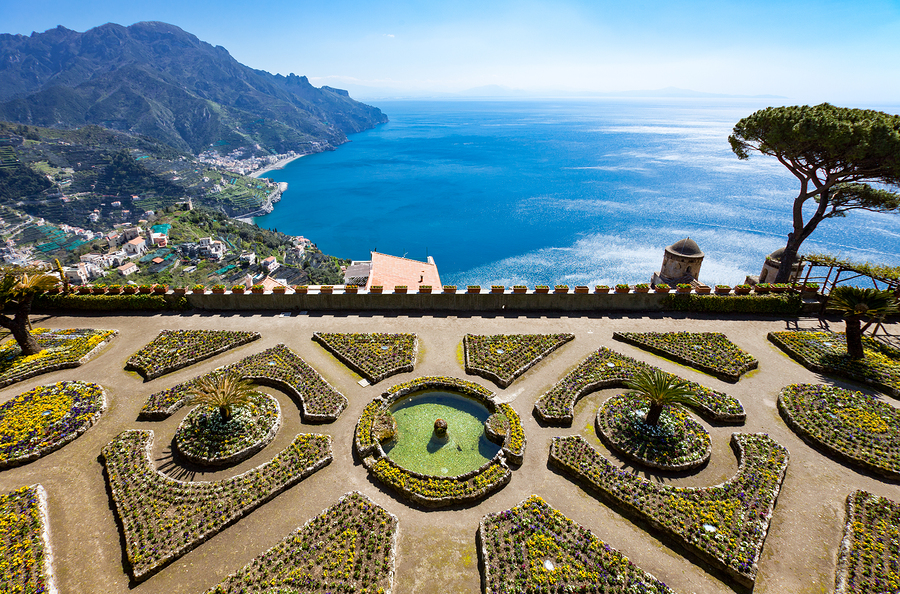
VILLA RUFOLO. Big names have long been associated with this villa, from the powerful Southern Italian nobles who owned the property to celebrities like Jacqueline Kennedy who came to visit. It was built in the 13th century (according to lore with more rooms than days in the year) by the Rufolo clan, an influential family that held sway in Amalfi, then a maritime republic (like Genoa and Pisa) and its architectural style references the area’s ties to the East (Amalfi was an important trading hub), blending Arabic and Gothic elements.
So important were the Rufolo, one even figured as a protagonist in Bocaccio’s iconic Decameron. The constant power struggles in the region saw Rufolo fortunes rise and fall; over the centuries the villa was owned by other aristocratic familes like the Confalone and Muscettola.In 1851 it was bought by Francis Nevile Reid, a Scottish botanist, who restored the structure and gardens. The Great Tower, once a strategic lookout and nearly one thousand years old, provides dramatic views of the Bay of Salerno. Today the villa and gardens are the site of contemporary art exhibits and the world famous Ravello Festival. Piazza Duomo, Ravello; Villarufolo.com. Open: 9 AM to 9 PM. Tower museum: from April 1, 11 AM to 5 PM.
VILLA FLORIDIANA (Museo Nazionale della Ceramic Duca de Martina). One of Europe’s finest porcelain collections is housed in the Villa Floridiana, a former Bourbon royal residence, and summer home to Ferdinand IV of Naples’ second wife Lucia Migliaccio, the Duchess of Floridia (his first spouse was the powerhouse Queen Maria Carolina, Marie Anoinette’s sister). In 1919 the government purchased the property from Migliaccio’s descendants and turned it into a museum, whose debut exhibition featured porcelain collected by the Duke of Martina, a highly regarded decorative arts connoisseur. The collection was further enhanced by a bequest in 1978 when an heir to the duke gave the museum a bounty of furniture and porcelain. The museum today showcases over 6000 porcelain and decorative items—Bohemian crystal, Gothic ivories, Sicilian coral, Venetian glass, and bronze objets—ranging from the Middle Ages to the 1800s. Of particular note is the Renaissance-era majolica; pieces from the great porcelain production centers on the Italian peninsula, among them Capodimonte, Deruta, Gubbio, and Faenza; and a large collection of porcelain including Ming and Qing dynasty china from Asia and from the great European names like Limoges, Sevres, and Meissen. Via Cimarosa 77; polomusealecampania.beniculturali.it/ Open: Wednesday to Monday 8.30 AM to 7 PM.
PALACE AND MUSEUM OF CAPODIMONTE. Its name and location might suggest a focus on porcelain, but this large neoclassical palazzo, built by the Bourbon king Charles VII as a hunting retreat, houses one of Italy’s richest art collections. Its hillside setting proved to be both blessing—affording striking view of the Bay of Naples—and headache, due to the location’s steep incline, which made the transport of building materials difficult. Construction, which began in 1738, took 100 years to complete.
From its earliest days the palace was thought of as both residence and museum, showcasing an important cache of classical sculpture and paintings from the renowned Farnese art collection, which Charles inherited from his mother, Elizabeth Farnese. The palace, home to the National Gallery (Galleria Nazionale), displays works by the major names in Western art like Titian, Botticelli, Raphael, Massacio, Bellini, Caravaggio and El Greco and even a 20th century icon, Andy Warhol. The royal apartments, lavish for a residence designed as country retreat, contain 18th century furnishings. Villa Napoli 2. Open: 8.30 AM to 7.30 PM, except Wednesdays and Christmas. Royal apartments open at 10 AM. A shuttle runs from Naples city center (Piazza Trieste e Trento/Teatro San Carlo) to the Palace and Museum.









 [Villa Rufolo, Ravello]
 [Photo credit: Wikimedia commons]
 [Photo credit: Due Sicilie – Magna Grecia]